
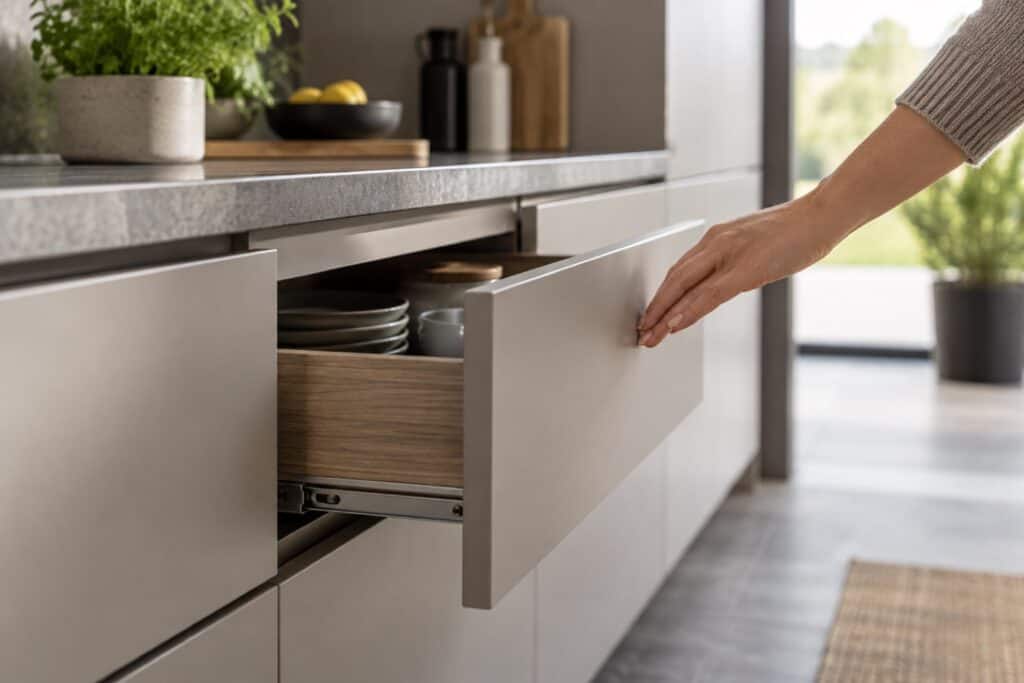
Should you bother paying extra for soft-close hinges and runners?
Some kitchen upgrades can look like an extravagance. But once you have lived with soft-close hinges on doors and soft-close runners on drawers, going back to banging cupboards feels like a step backwards. But are they really worth paying extra for? Here is how they work, where they bring real benefits and when it is not worth spending more.
How soft-close hardware works
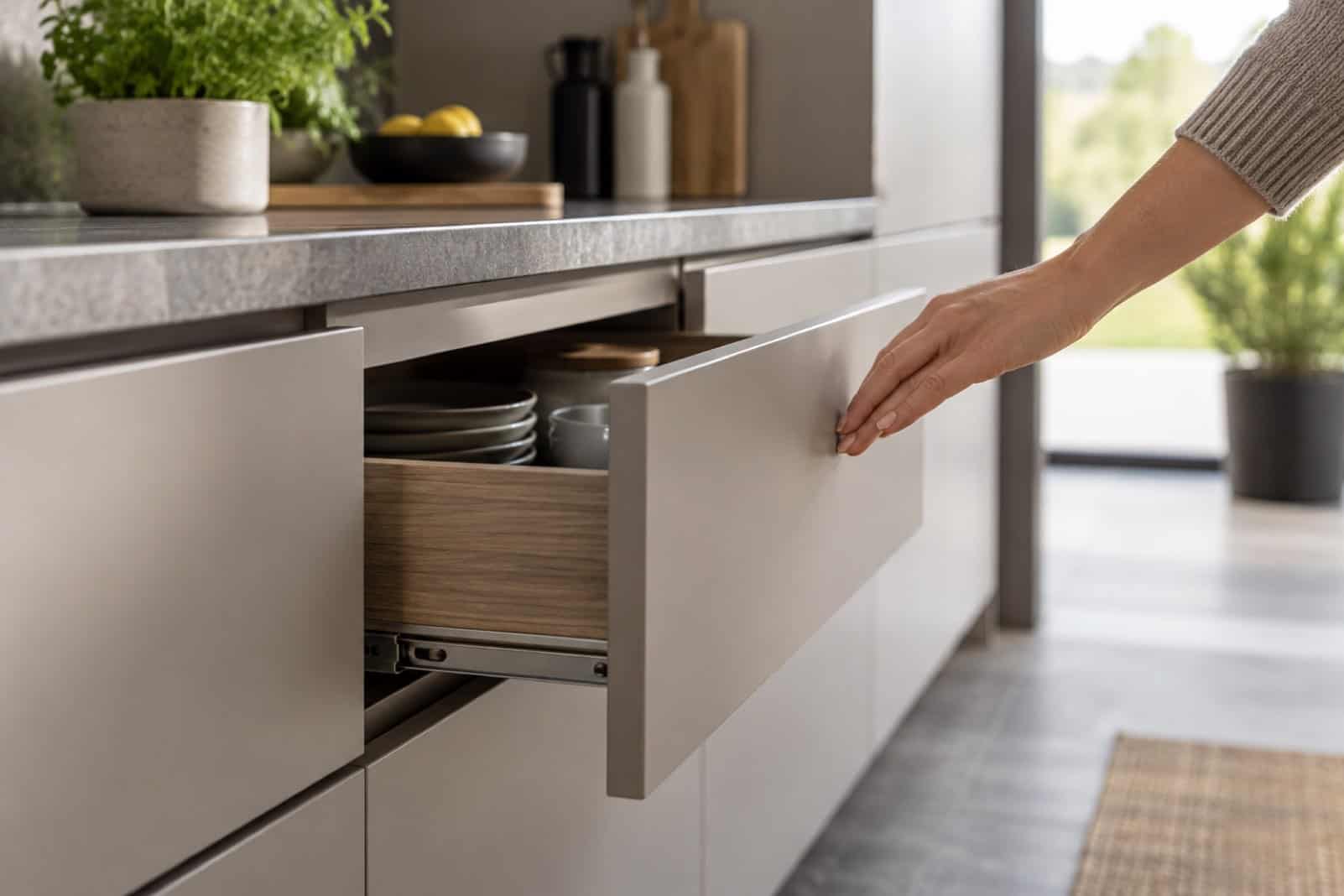
Soft-close hardware is built into the door or drawer, which gently slows it down just before contact so it closes quietly instead of slamming.
In hinges a small damper, usually filled with oil or air, is used to slow down the closing door in the last few centimetres and ease it shut. In drawer runners, the damper forms part of the runner and pulls the drawer closed smoothly once started. Some soft-close hinges have the damper built in, while others have it as a clip-on damper that can be fitted to existing hinges.
The benefits
- Much less banging, which is useful in open-plan homes, bedrooms and houses with young children.
- Less wear on doors, drawer fronts, hinges and fixings, because nothing is slammed.
- Fewer trapped fingers, since doors and drawers slow down before they close.
- A quieter, more upmarket feel to everyday use.
You may open wardrobes and kitchen drawers dozens of times a day, so small improvements are noticed. For Fitted Wardrobes Bournemouth, visit https://lamco-design.co.uk/bespoke-fitted-wardrobes
When it is usually worth it
- You are buying fitted furniture that you expect to keep for many years.
- You have children, or share the house with light sleepers.
- You are choosing heavy doors, such as mirrored or tall doors, which slam hardest.
- You want handleless doors, where push-to-open and soft-close fittings are designed to work together.
- You want the kitchen or wardrobe to feel quieter and more premium.
When you might skip it
For those on a tight budget, or furnishing a room that is used sparingly (e.g. a spare bedroom) then it’s possible to get by without the cost of soft-close. And it’s worth noting that clip-on dampers can often be fitted to standard hinges later on, so you can purchase standard hinges initially and still go for soft-close at a later date. However, drawer runners are harder to upgrade after they have been fitted, so if your drawers matter to you, it’s worth choosing soft-close runners from the off.
| Situation | Soft-close worth it? |
|---|---|
| Family kitchen used every day | Yes |
| Fitted wardrobes with heavy or mirrored doors | Yes |
| Handleless push-to-open design | Yes, choose fittings designed for it |
| Spare room storage on a tight budget | Optional |
| Upgrading old doors cheaply | Consider clip-on dampers |
Frequently asked questions
Can I add soft-close to my existing cupboards?
Yes, often. Many standard concealed hinges accept a clip-on damper, or can be swapped for soft-close hinges of the same design without changing the doors. Drawers are generally more complicated as the drawer runners usually need to be changed and must be of the correct size and depth for the drawer.
Do soft-close hinges wear out?
Dampers in concealed hinges are designed to last for many years. As time passes the dampers can degrade, especially on heavy doors or doors which are frequently shut very hard. High quality products from well established companies last longest, but from time to time a door can start to shut too quickly and in most cases this can be resolved quickly and inexpensively by replacing the damper or even the whole hinge.
The takeaway
Soft-close hinges and runners are not essential, but they are one of the easiest everyday upgrades you can make. As long as the price difference is reasonable, they are usually worth it for comfort, noise reduction and durability.
If you are planning a family kitchen, our five tips for creating a family-friendly kitchen cover more practical choices.
