
Is your fire alarm working? How to tell
A working smoke alarm is one of the simplest and most important safety features in any home. A fire that starts while you are asleep can spread quickly, and an alarm may be what wakes you in time to get out. But alarms can fail without you noticing. Here is how to tell whether yours is working, and what to do if it is not.
Check the power
If your fire alarm is hardwired, it is connected to your home’s electrical supply and usually has a backup battery. Many mains alarms have a small light, often green, that shows the unit is receiving power.
Battery alarms usually have a small indicator light that flashes every so often to show they are active. The exact colour and timing vary between models, so check the manufacturer’s instructions. A light alone does not prove the alarm will sound, which is why regular testing matters.
Test it regularly
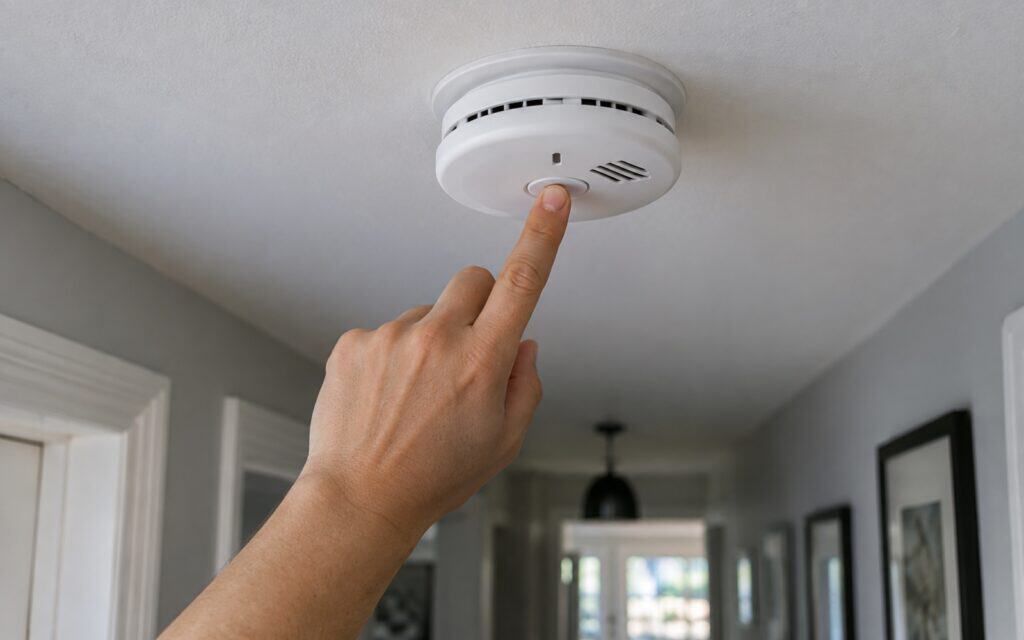
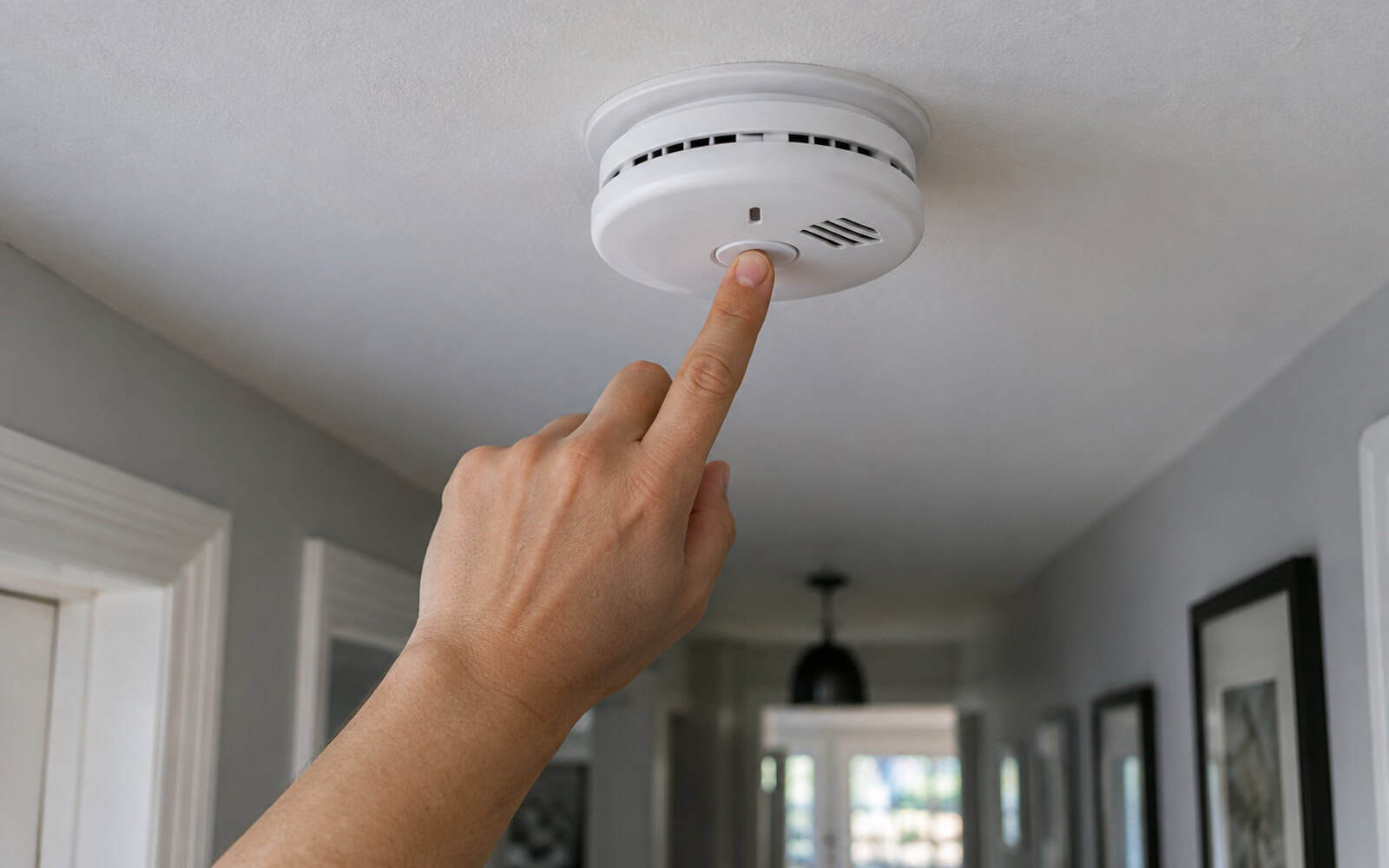
Press and hold the test button until the alarm sounds. How long you need to hold it varies by model, from a moment to several seconds. If your alarms are interlinked, all of them should sound together. Some combined smoke and carbon monoxide alarms have separate test patterns, so follow the instructions for your model.
The National Fire Chiefs Council advises testing smoke alarms at least once a month, and some fire services suggest weekly. Never test an alarm with a real flame or smoke from something burning. You risk starting a fire and could damage the sensor.
Signs your alarm needs attention
| Sign | What it usually means | What to do |
|---|---|---|
| A single chirp every minute or so | Low battery | Replace the battery, or the alarm if it is a sealed unit |
| No sound when tested | Flat battery or faulty alarm | Replace the battery; if still silent, replace the alarm |
| Frequent false alarms | Dust, steam or poor position | Clean it gently, consider moving it or changing the type |
| Past its replace-by date | Sensor may have degraded | Replace the alarm |
Interconnected systems
In homes with interlinked alarms, whether wired or wireless, one alarm detecting smoke should set off all the others. If some alarms do not sound when another is tested, there may be a wiring, pairing or compatibility problem. For hard-wired systems, a qualified electrician should investigate.
Replace old alarms
Smoke alarms do not last forever. The sensor degrades over time, so an old alarm may still beep when you press the button but be slower to detect real smoke. The NFCC advises replacing smoke alarms after ten years, or by the replace-by date on the unit.
Fire alarm installation and servicing
For businesses, landlords of larger properties and anyone with a more complex system, professional installation and servicing are essential. Getting fire alarms Northamptonshire is only an online search away, such as the services found at https://isefireproducts.co.uk/fire-alarm-systems/northamptonshire/.
Frequently asked questions
Where should smoke alarms be fitted?
Fit at least one smoke alarm on every floor of your home, ideally on the ceiling in hallways and landings, so you will hear it from bedrooms. Many fire services also recommend a heat alarm in the kitchen, where smoke alarms tend to give false alarms from cooking.
Do I need a carbon monoxide alarm too?
If you have any fuel-burning appliance, such as a gas boiler, gas fire or wood burner, a carbon monoxide alarm is strongly recommended in the same room. Carbon monoxide has no smell or colour, so an alarm is the only way to detect it.
Where to go next
For more on what the test button does and does not check, read why fire alarms need their monthly little test.
