
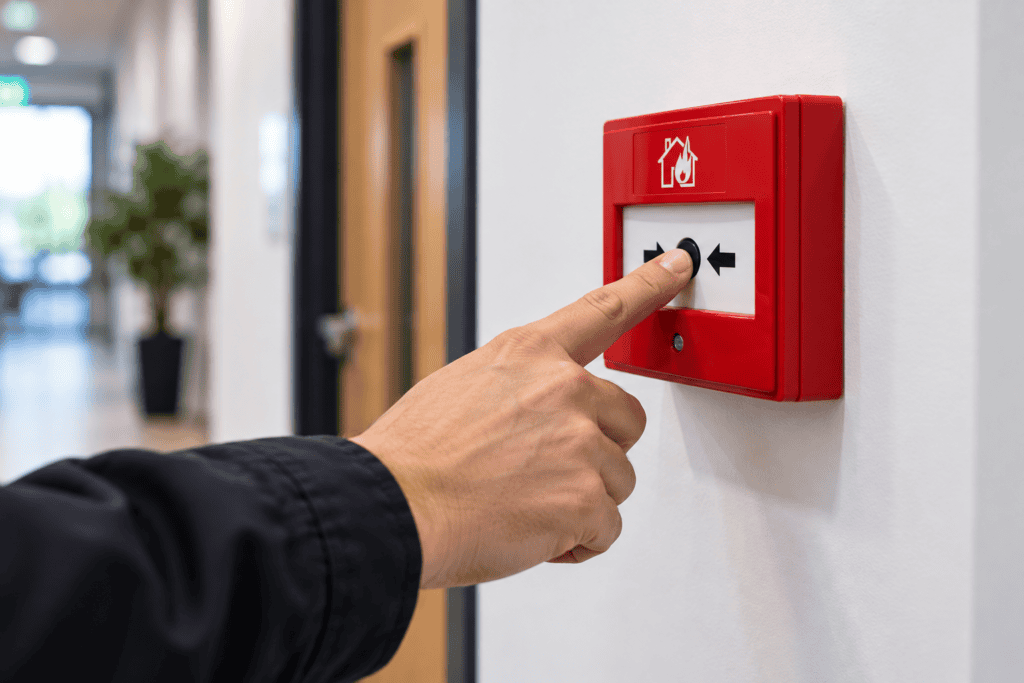
Why Fire Alarms Need Their Monthly Little Test
You can find out whether an alarm is working by pressing the test button on a smoke alarm – this takes about four seconds to do. Most people do it without a second thought, if they remember at all. Pressing the test button does tell you some things about your alarm, but not everything you might like to know.
What the monthly button test actually proves
Holding the test button down and hearing the alarm sound confirms that the alarm is powered by a battery or by the mains, that the circuit board is functioning correctly and that the sounder is loud enough to hear. With interconnected alarms throughout the home, all of the alarms should sound together, which also proves the link between them is working. This is why the UK fire services recommend that you test your domestic smoke alarms on a regular basis.
The National Fire Chiefs Council’s (NFCC) advice is to test your smoke alarms at least once a month. Testing weekly is also recommended by some fire authorities. To make testing a habit, test at the same time as another monthly activity such as paying a bill, or the first weekend of the month.
What the button test does not check
The test button checks the smoke detectors’ electronics and the sounders but does not introduce any smoke into the sensing chamber of the detector. It therefore cannot give any indication of how well a fire would be detected by the alarm.
There is a useful background explanation of official fire safety risk assessment guidance.
Dust, cooking grease, insect debris and general household grime accumulate over the years in the chamber and the sensor itself deteriorates with age. Pressing the test button may produce a beep, but the smoke detection may not be as fast as it was when first installed. According to the NFCC, all types of smoke alarms (whether wired into the mains or powered by a battery) should be replaced after ten years or by the replacement date shown on the base of the unit. Make sure you check the date of replacement when next testing the unit. In the absence of any date, or if there are obvious signs of age, it is recommended to replace the unit.
Homes and workplaces follow different routines
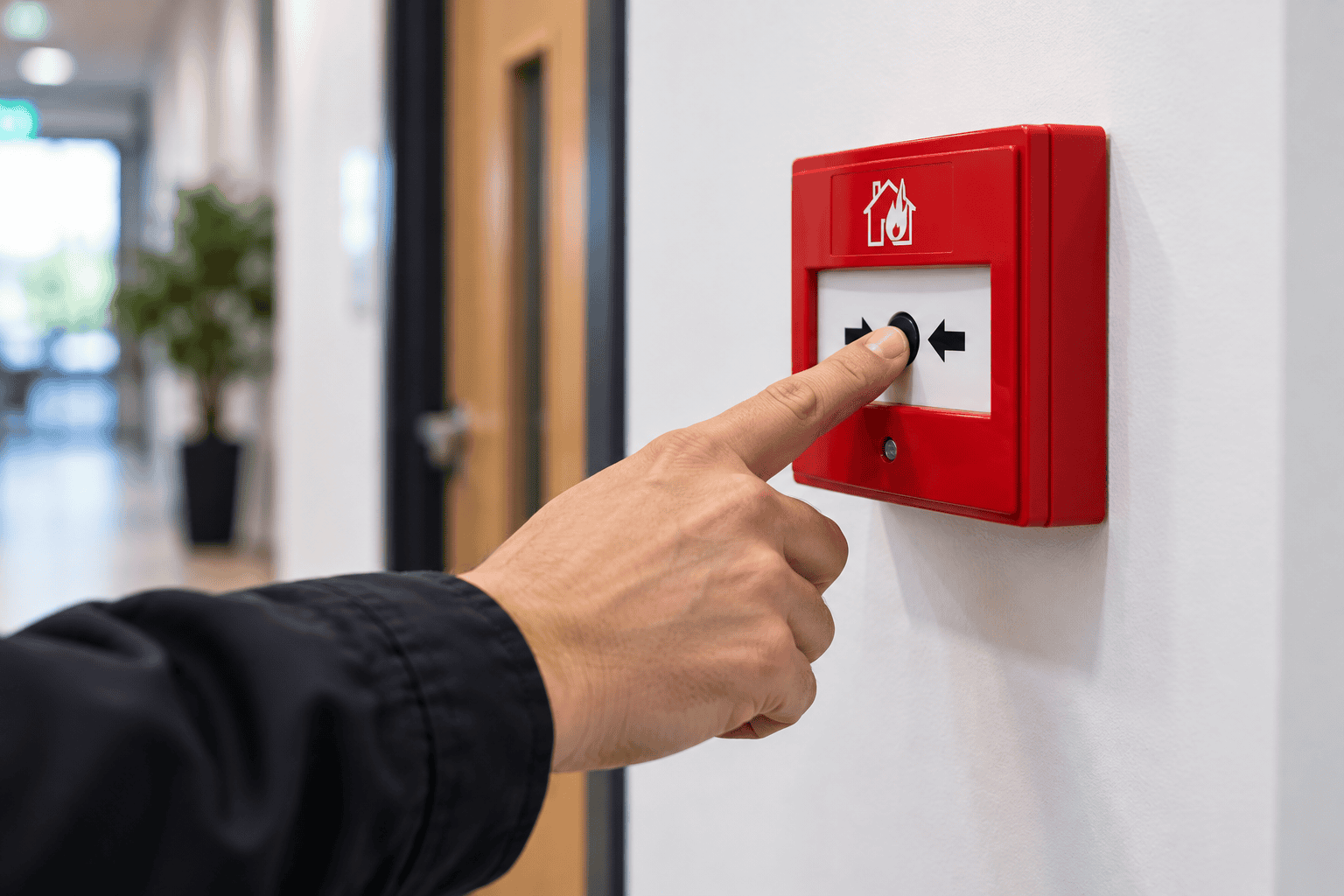
The monthly test is the rule for domestic smoke alarms. Businesses, shops, offices and blocks of flats with a fire alarm panel work to a different routine. Under the British Standard for these systems, BS 5839-1, the responsible person should test the system every week by operating a manual call point, using a different call point each week so that every one gets tested over time. A competent engineer should then inspect and service the whole system at least every six months.
| Check | At home (smoke alarms) | At work (fire alarm system) |
|---|---|---|
| Routine test | Press the test button at least monthly | Weekly, operating a different manual call point each time |
| Who does it | The householder | The responsible person or someone they nominate |
| Professional service | Not required; replace alarms after 10 years | At least every six months by a competent engineer |
| Record keeping | Optional | Log every test, fault and repair |
A simple monthly routine for your home
- Press and hold the test button on each alarm until it sounds.
- If your alarms are interlinked, check that every alarm in the house sounds together.
- Look for the replace-by date on the base and note it somewhere you will see it.
- Gently vacuum around the vents with a soft brush attachment to remove dust and cobwebs.
- Replace the battery in battery-powered alarms once a year, unless it is a sealed ten-year unit.
- Never cover an alarm or paint over it when decorating.
Frequently asked questions
Why does my smoke alarm chirp every so often?
One chirp every minute or so almost always indicates a low battery. For a mains-powered alarm, this usually indicates the back-up battery needs changing. Even when a new battery has been fitted, the chirping may continue. This may indicate that the alarm has reached the end of its life and should be replaced, not repaired.
Can I test a smoke alarm with real smoke?
Don’t try to test your fire alarm using a flame or letting something burn and then testing the detector for the smoke. Not only could you damage the fire detector but it could also cause a fire in your home. Engineers use a purpose-made test aerosol that is safe for the detector. To test a fire detector in your home, the recommended approach is to press the test button and replace the detector at ten years.
Do landlords have to test smoke alarms?
Private residential landlords in England must fit a smoke alarm on all floors used for dwelling purposes, and make sure every alarm is working on the day a new tenancy starts. Under government guidance, tenants are then expected to test their smoke alarms on a regular basis. If a tenant reports a fault with a smoke alarm, the landlord must fix or replace it.
Where to go next
If you are responsible for a workplace system, our guide to weekly fire alarm maintenance checks for business premises covers call points, panel faults and logbooks in more detail.
The monthly test was always meant as a quick health check, not the whole picture. For more on this, take a look at https://firealarmsystems.co.uk/.
