
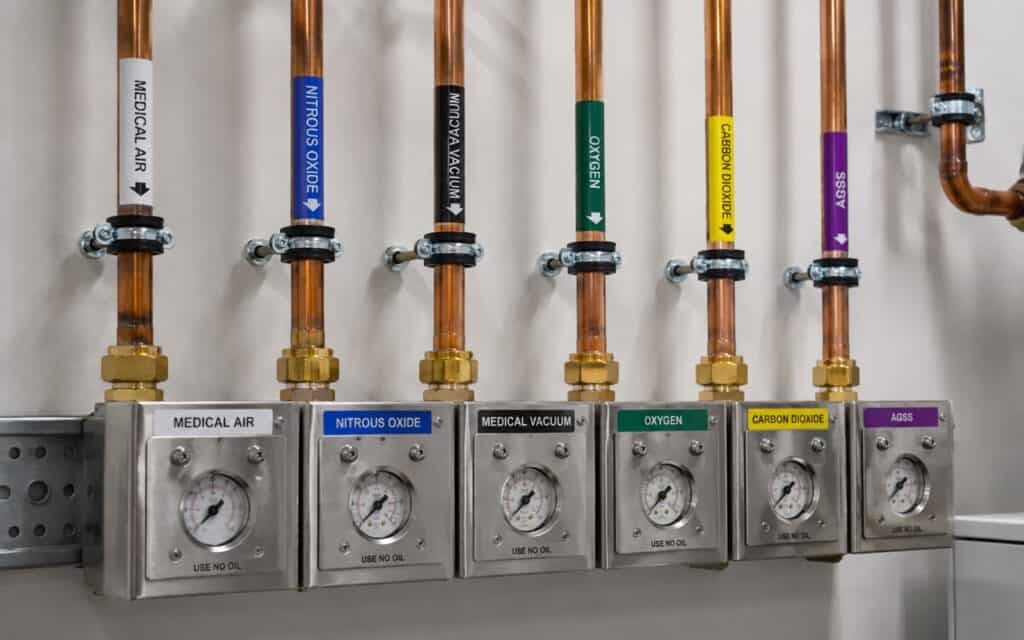
How is copper used in medical gas delivery systems?
You might not expect copper to be used as part of hospital equipment, but it is actually used behind the walls and ceilings of most hospitals to supply vital services to patients. In this article we will discover how copper is used in the medical gas systems that run through hospital walls, and why it is the material of choice.
What are medical gas delivery systems?
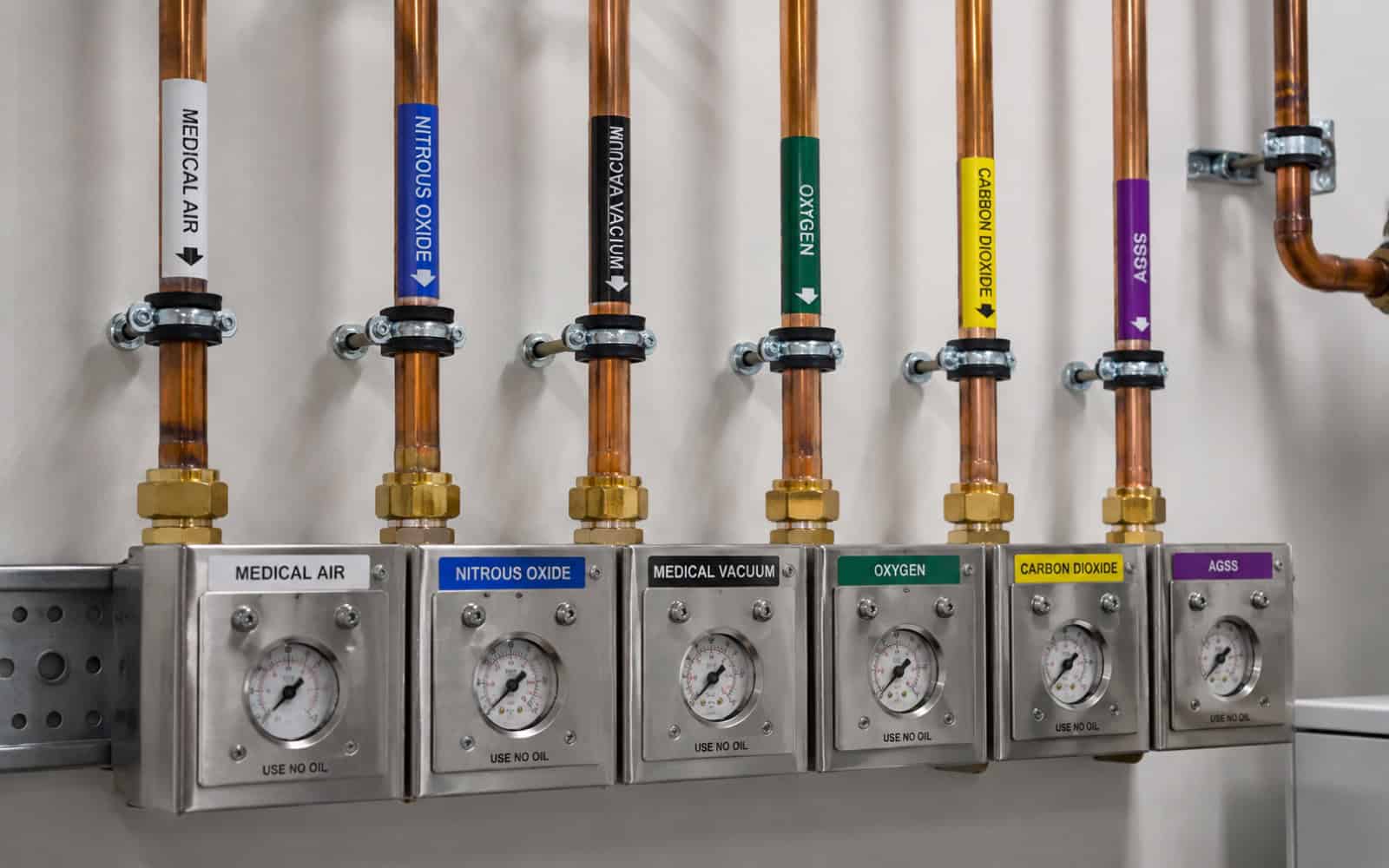
Medical gas pipeline systems supply wards, operating theatres and treatment rooms with medical gases such as oxygen, medical air, nitrous oxide and entonox, as well as with medical vacuum. Because these gases are administered directly to patients, they must be transported reliably through the hospital’s distribution system at the correct pressure and be contamination-free.
In the UK, the design, installation and testing of medical gas pipeline systems in healthcare buildings is guided by the Health Technical Memorandum HTM 02-01. It sets strict requirements for materials, cleanliness and testing.
Why copper is used
Copper is strong, durable and resistant to corrosion, and it is compatible with the medical gases these systems carry. The copper tube used is specially cleaned and degreased so that it is suitable for oxygen service, and it is delivered capped to keep it clean until it is installed.
For medical gas pipelines, precise control is placed on the making of joint connections. Joints between copper lengths of pipeline are typically braze joined whilst the interior of the pipe is blanked off and flushed with oxygen-free nitrogen to prevent oxide forming. This system is then pressure tested for leaks and the gas is subsequently analysed for purity prior to use.
Outside medical gas systems, copper pipework is used throughout hospitals and other buildings for water and heating, where quality copper pipe fittings give secure, leak-free joints.
Other benefits of copper in healthcare
Copper and many copper alloys have natural antimicrobial properties. Studies have found that many bacteria and viruses survive for a shorter time on copper surfaces than on materials such as stainless steel, which is why copper alloys are sometimes used for touch surfaces such as door handles and rails. Hospitals still rely on cleaning and infection control to fight dangerous bacteria and germs, but copper can add an extra layer of protection.
Copper pipe lines last a long time and need very little maintenance, which is important for a 24/7, decades-long service.
Copper at a glance
| Property | Why it matters in healthcare |
|---|---|
| Corrosion resistance | Long service life for pipework |
| Compatibility with medical gases | Keeps gases clean and safe |
| Strength and ductility | Can be bent and joined reliably |
| Antimicrobial surface | Useful for touch surfaces |
| Recyclability | Can be recovered and reused |
Frequently asked questions
Why is cleanliness so important in medical gas pipes?
Residual oils, greases etc. within the internal bore of an oxygen pipe can cause a fire. Furthermore, dirt, oils, grease, etc. can contaminate the gas that is supplied to the patients. Specially cleaned and capped copper tube is supplied for medical gases. A clean method of connection must be used in order to keep the inside of the pipe clean.
Who can install medical gas pipelines?
The installation and modification of medical gas pipeline systems should only be carried out by specialist, adequately trained and accredited contractors, and the work is tested and signed off before use. General plumbers are not qualified to perform such work.
Where to go next
For how copper and other pipes are joined in homes, read our guide on how to connect pipes and fittings in the home.
Copper pipes may not spring to mind when you think of a hospital, but they play a vital role in keeping patients and staff safe and enabling healthcare providers to function effectively.
