
How to connect pipes and fittings in the home
The connection of pipes in the home has become easier as the development of plumbing fittings has created strong joints that are less likely to leak. However, in selecting the correct fitting for the task in hand, it is necessary to understand the different types of pipe that are currently in use, together with the various methods by which they can be joined and some of the easy to miss safety points.
Types of pipes used in homes
There are many types of pipe used in homes. Older homes were often fitted with lead or iron pipes but the majority of modern homes are fitted with copper pipes for hot and cold water supply and plastic pipes for the waste. Supply pipe is now also often made of plastic such as PEX tubing, especially for new runs under floors. The most common size of copper pipe is 15mm but 22mm and larger are commonly used for boilers, cylinders, baths and main runs of pipe around the home. In most cases modern plumbing fittings can be used to connect up old and new pipework using special adaptors.
Lead pipework supplying drinking water should generally be replaced rather than jointed on. Lead can leach from pipework into water, especially in soft water areas. Your water supplier will be able to advise on replacing any part of the pipework within your control.
Soldered and compression joints
Soldered joints, also referred to as capillary joints, are one of the traditional methods of connecting copper pipes. Following the cleaning and application of flux to the connections, the pipes and fittings are then heated and the solder flows to create a watertight joint. Some fittings need solder to be added to the joint whilst others, such as solder-ring fittings, already contain solder within the ring. These types of joints are neat and cheap, but require a blowtorch, a heat mat and must be used with caution in relation to nearby timber and cables.
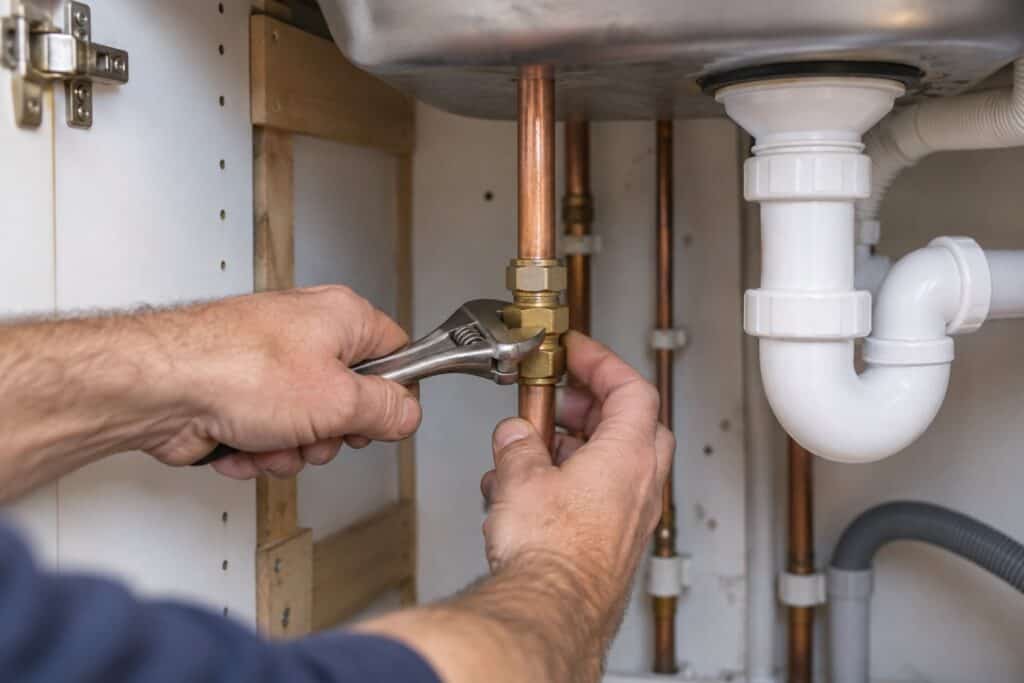
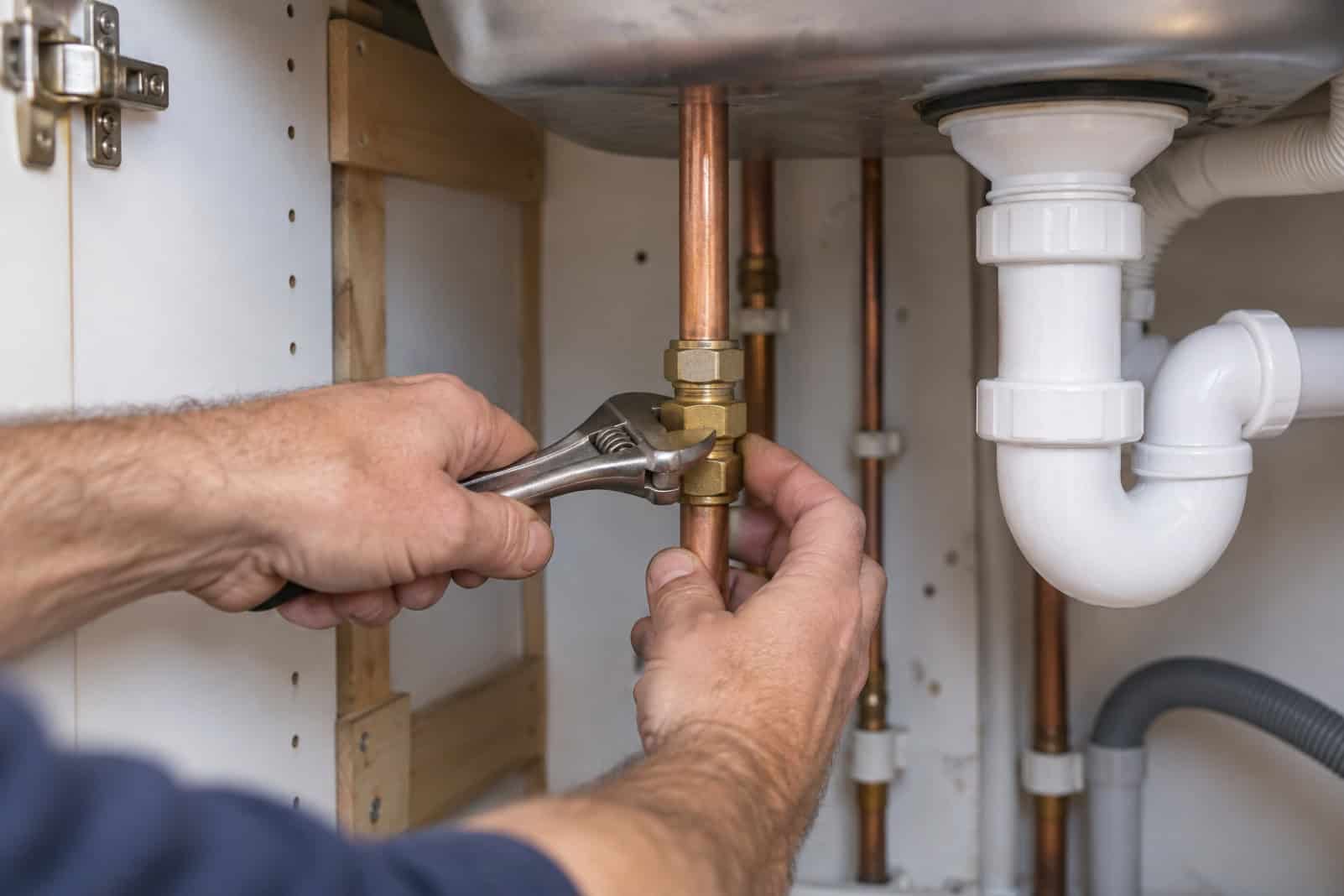
Compression fittings consist of a brass body, a nut and a small ring called an olive. The nut is tightened using a spanner to squeeze the olive onto the pipe to create a seal. No heat is required, making these types of fittings useful in confined spaces or near flammable materials. They can also be disassembled at a later date.
Push-fit and press-fit fittings
Plastic push-fit fittings are popular because they are quick and simple to use. Copper pipe connectors, such as watkinspowis.co.uk/products/copper-pipe-fittings-and-press-systems/, work with both plastic and copper pipes and use rubber seals to stop leaks.
Push-fit joints rely on a clean square cut end to the pipe which is then fully inserted into the fitting. Most plastic pipes need a pipe insert or support sleeve inside the pipe end. Press-fit systems use a special tool to crimp the fitting to the pipe. They are quick and reliable but the cost of the tool is high and therefore they are mostly used by professionals.
| Joint type | Tools needed | Good for | Watch out for |
|---|---|---|---|
| Soldered | Blowtorch, flux, solder, pipe cleaner | Neat, permanent copper runs | Fire risk, draining pipes fully first |
| Compression | Two spanners | Tight spots, joints you may undo later | Over-tightening, olive not seated |
| Push-fit | Pipe cutter, deburring tool | Quick DIY repairs, plastic pipe | Missing pipe insert, pipe not fully home |
| Press-fit | Press tool | Fast professional installation | Tool cost, correct jaw size |
Safety advice
When using plastic push-fit fittings with copper pipes, ensure that the electrical bonding is still connected correctly. Metal pipework is often earthed, and the connection can be broken by a piece of plastic piping. Check with a qualified electrician if you’re unsure.
The UK Health and Safety Executive also gives advice on safe plumbing and electrical work.
Before cutting any pipes make sure the water supply is turned off and the section to be cut drained. Make sure all connections are tightened up properly and pipes supported using clips to prevent them from moving and loosening joints over time. Note: in the UK, work on gas fittings must be done by a Gas Safe registered engineer.
Common mistakes
- Cutting pipe at an angle or leaving burrs, which damages seals in push-fit fittings.
- Overtightening compression nuts, which distorts the olive and causes a weep.
- Forgetting the pipe insert when using push-fit on plastic pipe.
- Soldering a pipe that still has water in it, so the joint never reaches temperature.
- Leaving long runs unclipped, so pipes knock and joints work loose.
Frequently asked questions
Can I join plastic pipe to copper pipe?
Yes. Push-fit fittings are made for joining both materials, which makes it straightforward, and compression fittings can be used with a pipe insert in the plastic pipe. Check that the selected fitting is rated for the sizes of pipe or pipes involved and that, where the copper pipe was previously earth bonded, the earth bonding is still continuous.
How do I know if a new joint is leaking?
Slowly turn the water back on, then wipe the joint dry with a cloth. Hold a piece of tissue under the joint for a few minutes and then check after a few hours and the next day for signs of slow weeping. A slow drip from a compression joint can often be sorted by turning the nut a fraction more.
Where to go next
If you are choosing materials for new pipework, our guide to the best materials for pipes compares the options.
