
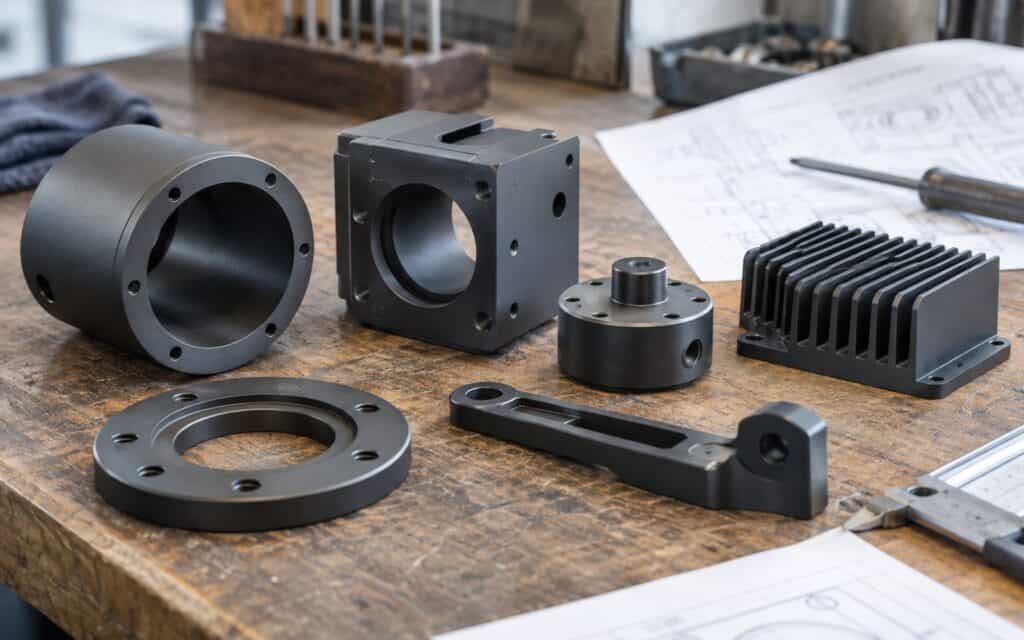
Six Advantages of Hard Anodising
Hard anodising is a specialist surface treatment used to greatly increase the durability of metals such as aluminium and it greatly increases the performance of these metals. It makes a much thicker and denser oxide layer than standard decorative anodising. It is widely used on components for the aerospace, medical, automotive, food processing and defence industries. Here are 6 advantages and the limits of hard anodising.
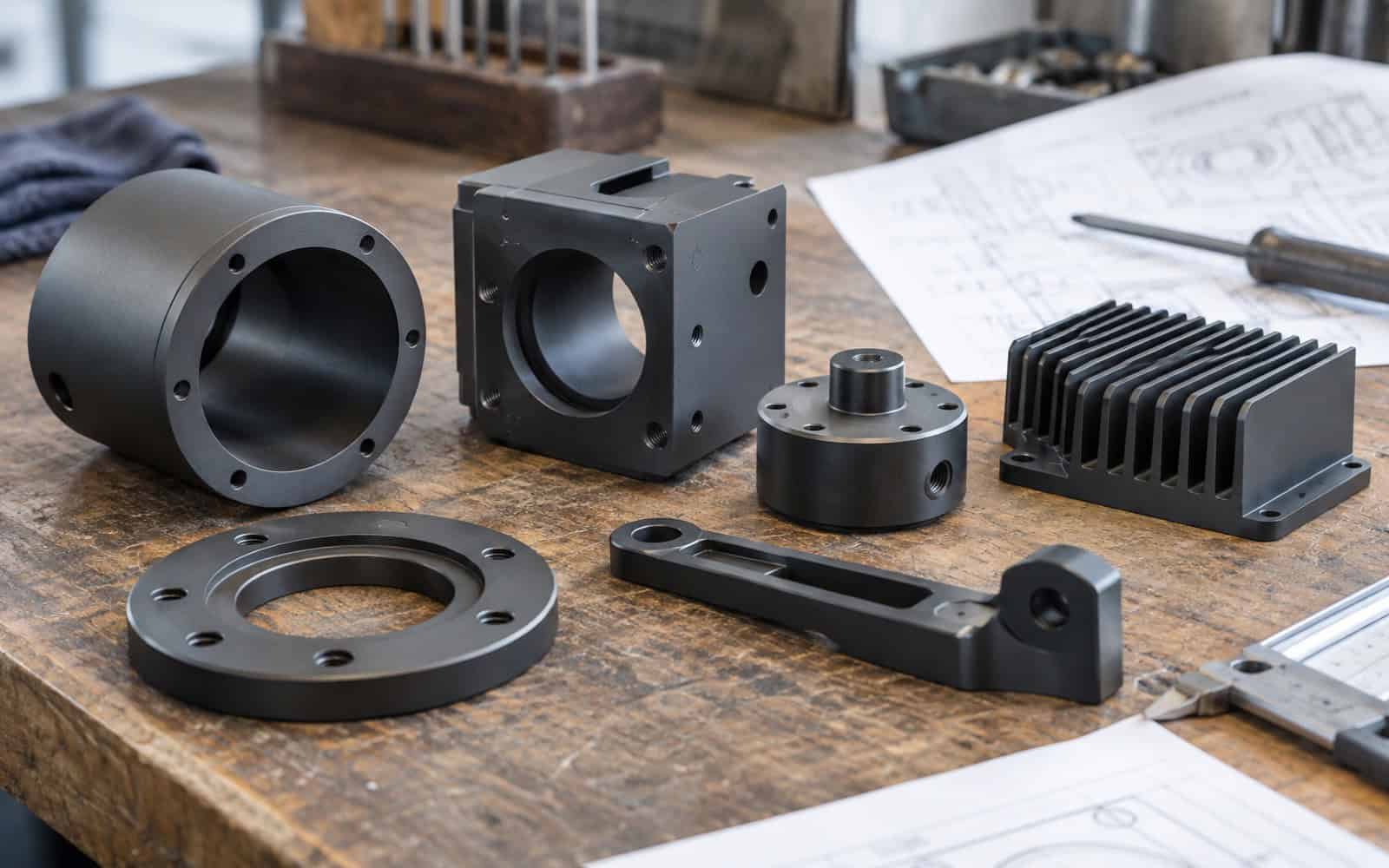
How hard anodising works
Anodising is an electrochemical process where the metal part (in this case aluminium) is made into the anode and immersed in an acid electrolyte solution. An electric current is then passed through the part and as a result a layer of the metal’s own oxide is built up from the surface of the metal. For hard anodising the electrolyte is colder and the current density is higher than for standard anodising. The coating is thicker, harder and more dense than for standard anodising. Because the coating grows partly into the surface of the part and partly outwards from it, it is necessary to allow for dimensional change on precision parts.
1. Exceptional wear resistance
The greatest benefit of hard anodising is the large increase in surface hardness that a part can receive. This enables parts to run that would normally wear too quickly, e.g. pistons, cylinders, gears and machine components. By allowing lightweight aluminium to be used in high wear applications, parts can be made lighter than they would otherwise have to be in steel.
2. Electrical insulation
Aluminium oxide is an electrical insulator. Therefore parts anodised to a hard finish are non-conductive. This is of value in the fields of electronics and electrical equipment, where parts need to be insulated from each other or from their cases.
3. Corrosion protection
The thick oxide layer protects aluminium in harsh environments (marine, chemical, industrial) but the coating can be sealed after anodising to improve corrosion protection. This has the drawback of slightly reducing wear protection, so the choice depends on the application.
4. Good for lubrication
The unsealed anodic layer of aluminium has a fine and porous surface structure. This surface is able to hold lubricants and can be impregnated with materials like PTFE. The porous surface of the anodic layer thus reduces friction and helps moving parts perform well under load.
For those interested in learning more about hard anodising, consider checking a specialist such as poeton.co.uk/surface-treatments/anodising/hard-anodising.
5. Thermal performance
In general the oxide layer is heat resistant and acts as a thermal barrier for parts exposed to heat. Due to the higher expansion of aluminium than the coating, very large changes in temperature can lead to fine surface cracks (crazing). Such conditions require specialised knowledge and must be discussed with experts.
6. Hygienic and easy to clean
Hard anodised surfaces are hard, stable and easy to clean, ideal for medical devices and food-processing equipment, where cleanliness is essential. Hard anodised aluminium is also widely used for cookware.
Hard anodising at a glance
| Property | Benefit | Typical uses |
|---|---|---|
| Hardness | Wear and abrasion resistance | Pistons, gears, slides |
| Insulation | Non-conductive surface | Electronic housings |
| Corrosion resistance | Longer life outdoors and in chemicals | Marine and industrial parts |
| Cleanability | Hygienic surface | Medical and food equipment, cookware |
Frequently asked questions
What is the difference between standard and hard anodising?
Standard anodising produces a relatively thin layer for appearance and moderate corrosion protection, often dyed in bright colours, while hard anodising produces a much thicker, hard wear-resistant layer, typically in a grey to dark bronze or black colour.
Can steel be hard anodised?
No. Anodising works on aluminium and some other metals such as titanium and magnesium, which form stable oxide layers. Steel on the other hand requires a different approach, such as plating or other conversion coatings.
Where to go next
Comparing options? Read our three metal surface treatment FAQs.
Hard anodising combines durability, protection and versatility, which is why it is used in so many industries.
