
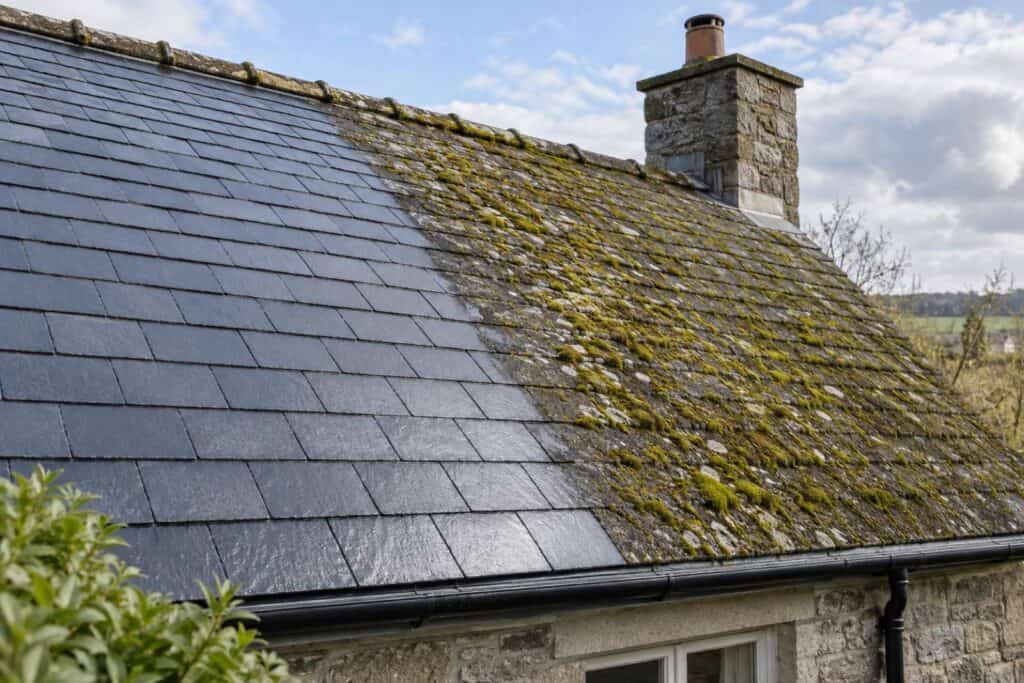
How Long Does Roof Cleaning Last?
How long roof cleaning lasts is dependent on a proper execution of the surface cleaning (moss) and the subsequent application of a roof treatment (biocide). A basic surface cleaning can become unsightly within a year or so, depending on the roof surface type and condition as well as the location of the property. A thorough cleaning of all dirt followed by a biocide treatment can last for a few years.
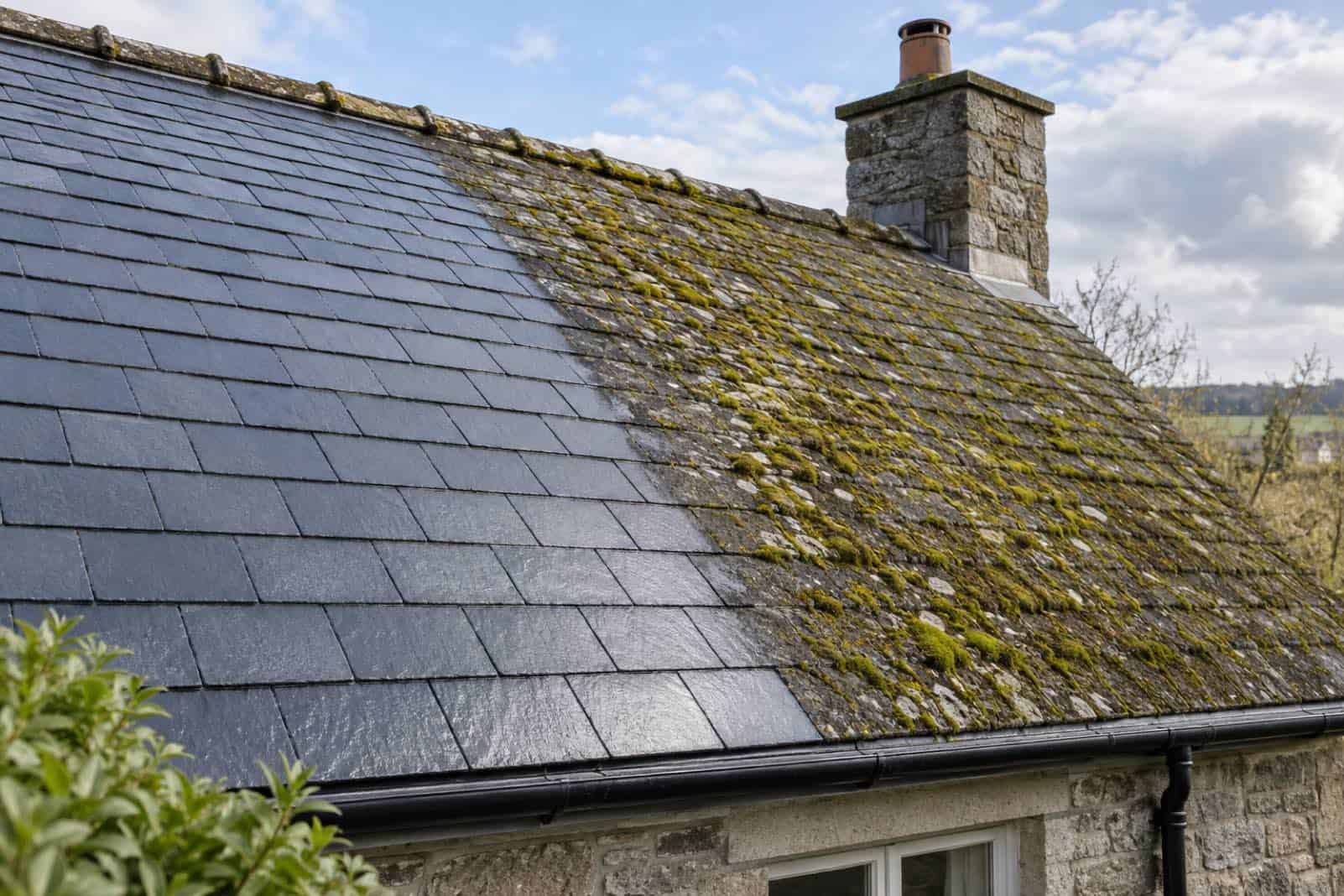
What decides how long it lasts
Moss and algae prefer to grow in damp, shady conditions. Growth will return to a cleaned surface sooner on roofs near trees, on north-facing slopes and on properties in spots that stay wet for long periods. Porous, rough tiling provides more ‘hold’ for spores than smooth surfaces such as slate or glazed tiles.
What is the longevity of roof cleaning?
An initial clean of the surface moss may look to solve your roof cleaning problems but new growth can appear in as little as 12 months and this is due to spores and roots being left behind on the roof to regrow. A more thorough service such as moss removal followed by a softwash or biocide treatment usually lasts longer as it kills the spores that cannot be seen with the naked eye.
For Roof Cleaning Gloucester, contact www.stagsoftwash.com/residential/roof-cleaning-gloucester
A rough guide to how long each method lasts
| Method | Typical result | What it involves |
|---|---|---|
| Manual removal only | Usually around 6 to 18 months | Scraping and brushing off surface moss |
| Removal plus biocide treatment | Commonly around 2 to 4 years | Moss removed, then a treatment to kill remaining spores |
| Ongoing maintenance plan | Can keep growth under control long term | Periodic light re-treatment and gutter clearing |
Please note that these are typical ranges rather than guarantees and that a shaded roof under trees may require treatment sooner, while an open, sunny roof could stay clean for longer.
Maintenance tips that actually help
In simple terms, the aim is to stop shade, moisture and debris from resting on your roof for as long as possible, and by implementing a few simple habits a clean roof will last much longer.
- Clear gutters at least once or twice a year. Blocked gutters overflow onto the roof edges and keep them damp.
- Check the roof and gutters after autumn leaf fall and after storms.
- Cut back overhanging branches to let in sunlight and airflow.
- Look out for missing, slipped or cracked tiles so rainwater cannot get into the roof structure.
- Ask about a re-treatment plan. A light biocide application every year or two can make a real difference.
A word of warning about pressure washing
Be very careful when cleaning tiled roofs. Try not to use a pressure washer on a tiled roof unless it has been assessed by a professional as safe for it. High pressure can strip the surface of concrete tiles, cause older tiles to crack and allow water to enter under the laps. A poor method of roof cleaning can cause far more damage to a roof’s lifespan than moss ever could. Softwashing uses low pressure and a cleaning solution to gently clean most roofs.
Working on a roof means working at height, one of the biggest causes of serious injury to people. Leave roof cleaning to a professional unless you have the correct access equipment and are experienced in using it.
Frequently asked questions
Does moss actually damage a roof?
Yes, it can cause problems. Moss holds water up against the tiles, which can speed up weathering. In cold weather, this can cause frost damage to tiles. Also, large clumps of moss can come loose and block gutters and downpipes, causing water to overflow. Small amounts of moss are generally of cosmetic concern only, but heavy growth should be dealt with before it becomes a problem.
What is the best time of year to clean a roof?
Many roof cleaners prefer spring or early autumn, when the weather is mild and the moss is easier to remove. Biocide treatments generally need a dry spell afterwards so they are not washed straight off by rain. Your roof cleaner can advise on timing for the treatment they use.
Where to go next
For more on keeping your roof in good order, read our guide on looking after the roof over your head.
