
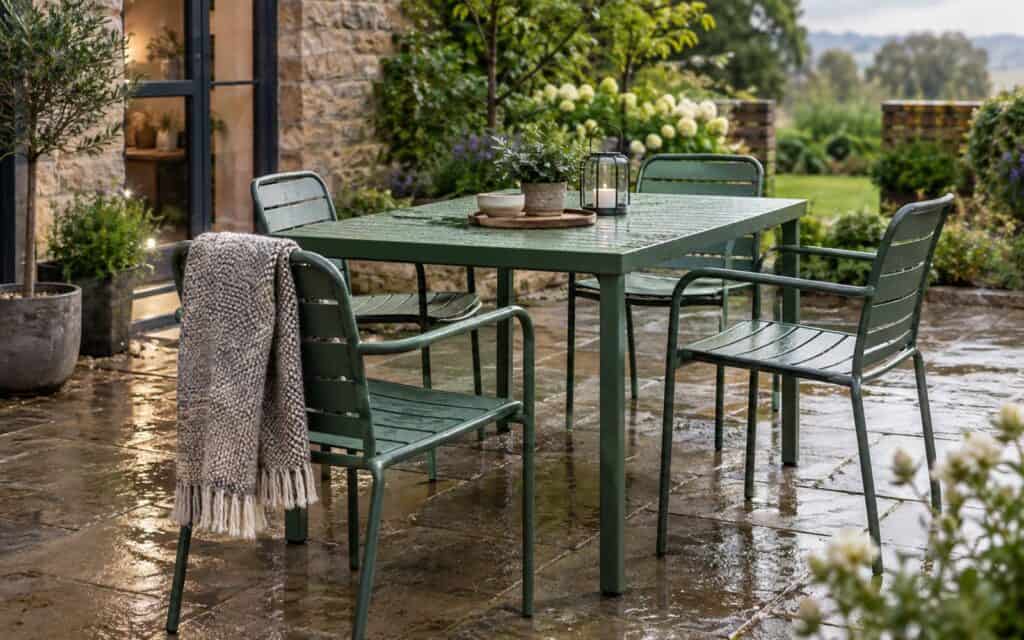
How metal finishes are used with garden furniture
In the UK we have to contend with cold, damp weather as well as occasional heatwaves and a lot of rain. The finish to metal garden furniture has to last for several seasons and not look tired and rusty. The finish can also be used to give the article a style to complement the garden in which it will be used.
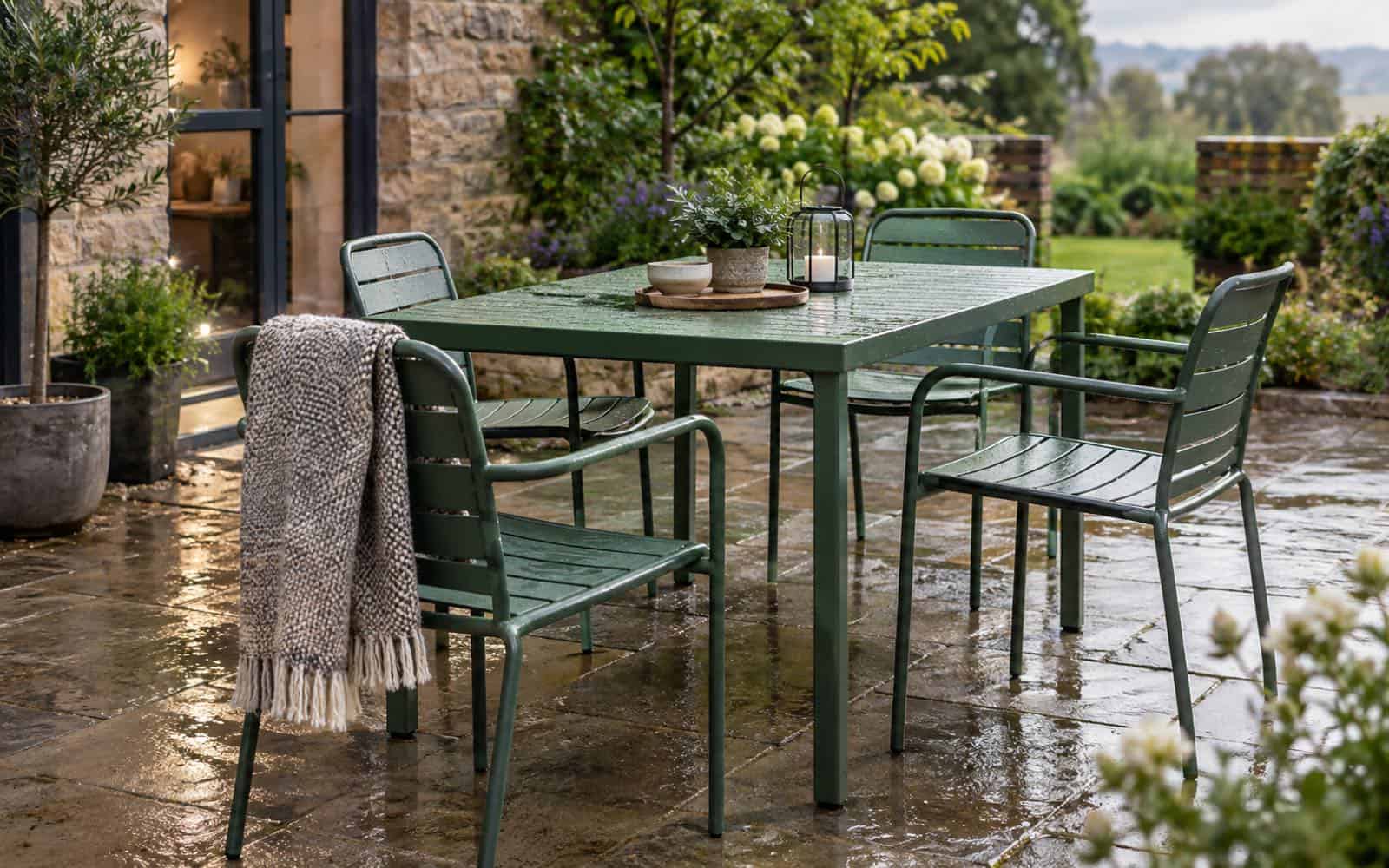
Powder coating: the most common finish
Powder coating produces a smooth and tough surface that is scratch resistant and helps resist corrosion. It is applied by spraying fine powder at the component which is then baked in a large oven to form a continuous film. It is used on aluminium and steel furniture in the UK because it performs well in damp conditions and is low maintenance. It is available in a huge variety of colours and finishes including matt and textured finishes in colours from black to bright hues.
Galvanising for heavy-duty pieces
Galvanising coats steel with zinc to stop it from rusting. Galvanised steel is particularly suited to heavy-duty garden furniture that is to be left outside all year round, such as benches, playground swing frames and other playground equipment. Many items made from galvanised steel are also powder coated to give both long-lasting rust protection and a coloured finish.
Bistro sets create a chic Paris feel for your small garden all year round.
Painted and clear finishes
There are many paints available that are designed to be used on outdoor metal and to resist peeling and fading in sun and rain, providing a colour finish that can be touched up as required. The use of a clear protective coat will allow the natural appearance of the metal to be seen, whilst providing an extra layer of protection against the elements.
Anodising for aluminium
Anodising thickens the natural oxide layer on aluminium, making the surface harder and more resistant to corrosion, and it can be coloured. Hard anodising not only enhances durability but also gives components a sleek, professional finish. Specialist providers such as poeton.co.uk/surface-treatments/anodising/hard-anodising offer this service.
Finishes compared
| Finish | Best for | Maintenance |
|---|---|---|
| Powder coating | Aluminium and steel furniture in any colour | Wash occasionally, touch up chips |
| Galvanising | Heavy-duty steel pieces left out all year | Very low |
| Paint | Traditional wrought iron and steel | Repaint every few years |
| Anodising | Aluminium | Low, avoid harsh cleaners |
Looking after metal garden furniture
- Wash with mild soapy water a few times a year and rinse off.
- Check for chips and scratches, and touch up steel or iron quickly before rust starts.
- Make sure feet and joints do not sit in standing water.
- Cover or store furniture over winter if possible, using breathable covers.
- Avoid abrasive pads and harsh chemicals, which can damage the finish.
Frequently asked questions
Does aluminium garden furniture rust?
No, aluminium does not rust in the same manner that steel does. It is often used for garden furniture because it does not rust. However, it can get a dull oxide layer on it after a while. Many finishes help with this, such as powder coating and anodising.
Can I repaint metal garden furniture?
Yes. Clean the surface and remove any loose paint and rust with a wire brush. Then apply a suitable metal primer followed by an exterior metal paint. Items with a powder-coated finish can be painted with a suitable primer or have the whole finish professionally stripped and re-coated.
Where to go next
Cushions need care too. Read our advice on choosing and caring for outdoor fabrics to avoid mildew and mould.
The right finish combines protection against the British weather with good looks, so your garden stays an inviting place to spend time.
