
Why Victorian Glass Still Twists Light So Beautifully
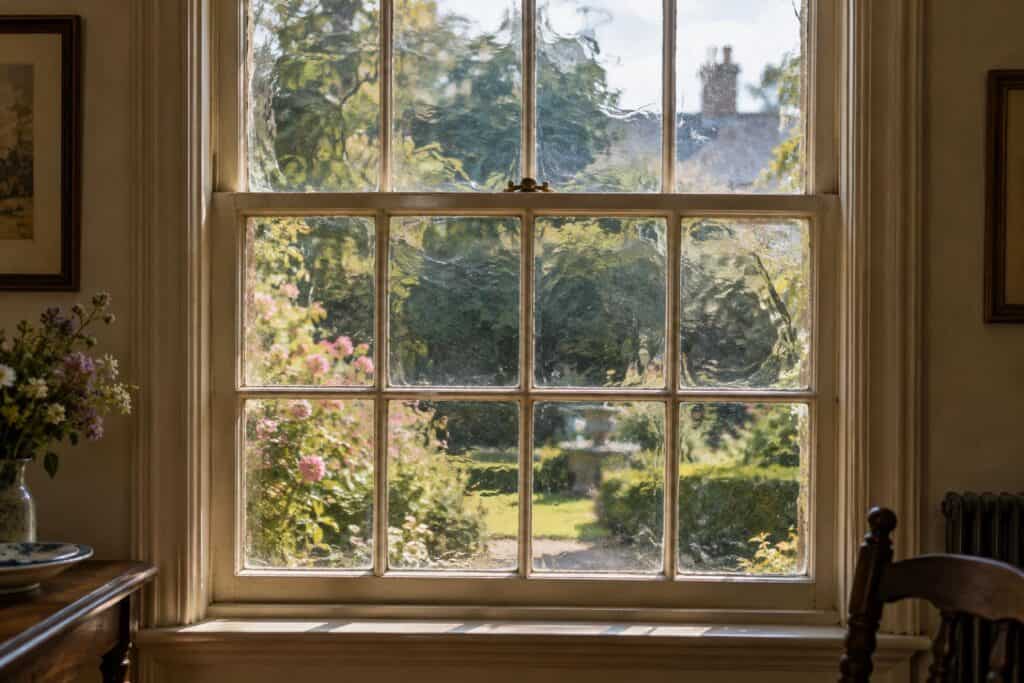
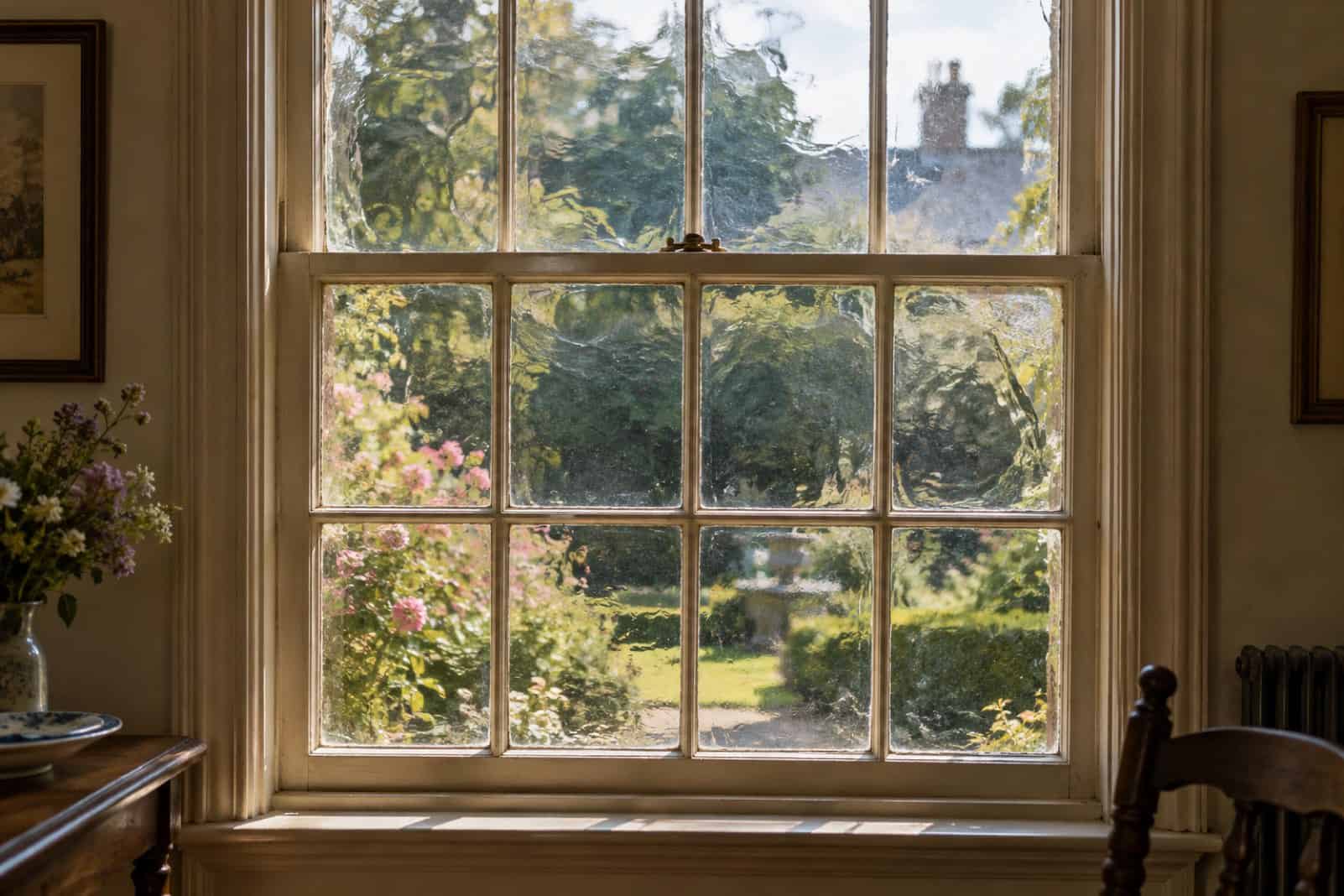
When viewing from down low inside a room, looking out through an old sash window, the straight line of the opposite roof appears to wobble as it runs along the surface of the glass. A pool of light forms in a corner of the glass and then moves as you follow it with your head. This is not caused by your eyes but by the glass itself. It is one of the simple delights of living in old houses.
How Victorian window glass was made
For the most part, Victorian era windows were made using the cylinder method of glass production, sometimes referred to as broad sheet glass. In this process, a glassblower would gather a large amount of molten glass on the end of his iron blowpipe and, by blowing and swinging it, form the glass into a long cylinder. The ends of the cylinder were then cut off and the entire length split down its centre. The glass was then reheated in a kiln until soft, after which it was opened out into a flat sheet and slowly cooled to prevent cracking.
The process was skilled but never made the sheet of glass perfectly even, failing to get rid of the ripples and ridges that were formed in the blowing and flattening process. The glass contained tiny air bubbles, often called seeds, and was slightly uneven in thickness across the sheet, which is the key to the effect you see today.
Why the glass bends the light
Since the sheet varies in thickness across the pane, each part of the glass will bend light to a slightly different degree. As a result the glass acts like a very weak and uneven lens. Straight lines appear to wobble when viewed through the glass, and outside reflections break up into soft waves instead of forming a single mirror image. As the sun moves across the sky during the day, the angle of the light will change, and the resulting bright patches on the floor or wall will shift.
From the street, a row of old sashes can appear as a series of different shades of light and dark as each pane reflects the sunlight unevenly. This is a major part of the character of a Victorian or Georgian exterior and is often the first thing lost when the windows are taken out and replaced with new ones.
What float glass changed
For over a century, glassmakers struggled to eliminate imperfections from flat glass. Since the 1950s, however, the float glass process developed by Pilkington has produced clear, strong and economical flat glass. Float glass is made by pouring molten glass onto a bath of molten tin, where it spreads, flattens under its own weight and cools evenly to form a flat, even sheet. Float glass has near-perfect parallel surfaces and is used in almost every modern window.
If you are looking for Sash Window Repair, see www.sashwindowpreservation.co.uk/services/sash-window-repair/.
The disadvantage of float glass is that it is perfect. A float pane gives a flat, mirror-like reflection, showing a view exactly as it is. This means that when it is used for a window, it can look noticeably different from its neighbours. While there is now a specialist restoration glass that imitates the ripple of older glass and is a much closer match than float glass, it is still new and not the original.
Why historic glass is worth keeping
Conservation guidance is clear that original handmade glass should be kept wherever possible. There is a useful background explanation of Historic England’s guidance on historic windows.
Historic England recommend that wherever possible crown and cylinder glass should be kept by joiners undertaking repairs to historic windows, as modern glass cannot reproduce the effect. This type of glass is thin and brittle but careful repair work can mean that it is saved. Softening the old putty gently as opposed to chipping it out is preferred and where possible old panes will be removed from a window and reused by the joiner as opposed to being broken.
How to look after old glass
- Clean it with a soft cloth and mild soapy water, not abrasive pads or scrapers.
- Keep putty and paint in good condition so water cannot get behind the glass.
- Ask for warm, careful putty removal when a sash is repaired, so panes can be reused.
- Keep any sound old panes that come out, as they can reglaze a damaged sash later.
- Improve comfort with draught-proofing and secondary glazing before thinking about replacement.
Frequently asked questions
How can I tell if my window glass is original?
Stand to one side and look at the reflection of a straight line across the road, such as a gutter or a window frame. The reflection in old handmade glass will appear to ripple and bend. You may also see small bubbles or faint lines within the glass. Modern float glass, however, will give a straight, flat reflection, much like a mirror. There will be no bubbles within the glass.
Is old glass thicker at the bottom because glass flows over time?
This is a widespread myth. Glass does not visibly flow at room temperature over hundreds of years, although glass from centuries ago can vary in thickness because of its method of manufacture. Many old panes were fitted with the thicker edge at the bottom because that is more stable, but some were fitted the other way up.
Where to go next
If your home is listed, changes to windows and glazing may need permission first. Our guide to changes that need listed building consent explains when to check with your local planning authority.
When a single pane fails, keeping the rest of the original glass, and even a cracked pane where it is safe to do so, is usually the better choice. No replacement, however well made, quite reproduces the slow flicker of afternoon sun through a slightly thicker patch of Victorian glass.
