

Food etiquette to know for the office
Whether you enjoy going into the office or not, many of us end up there for a big part of our week. This means we could end up eating at least one proper meal and a few snacks in the workplace throughout the day. Our eating has the potential to affect how we feel, how the rest of our day goes and how we get on with colleagues. In this post we will cover office food etiquette and how to make eating your lunch at work something to look forward to.
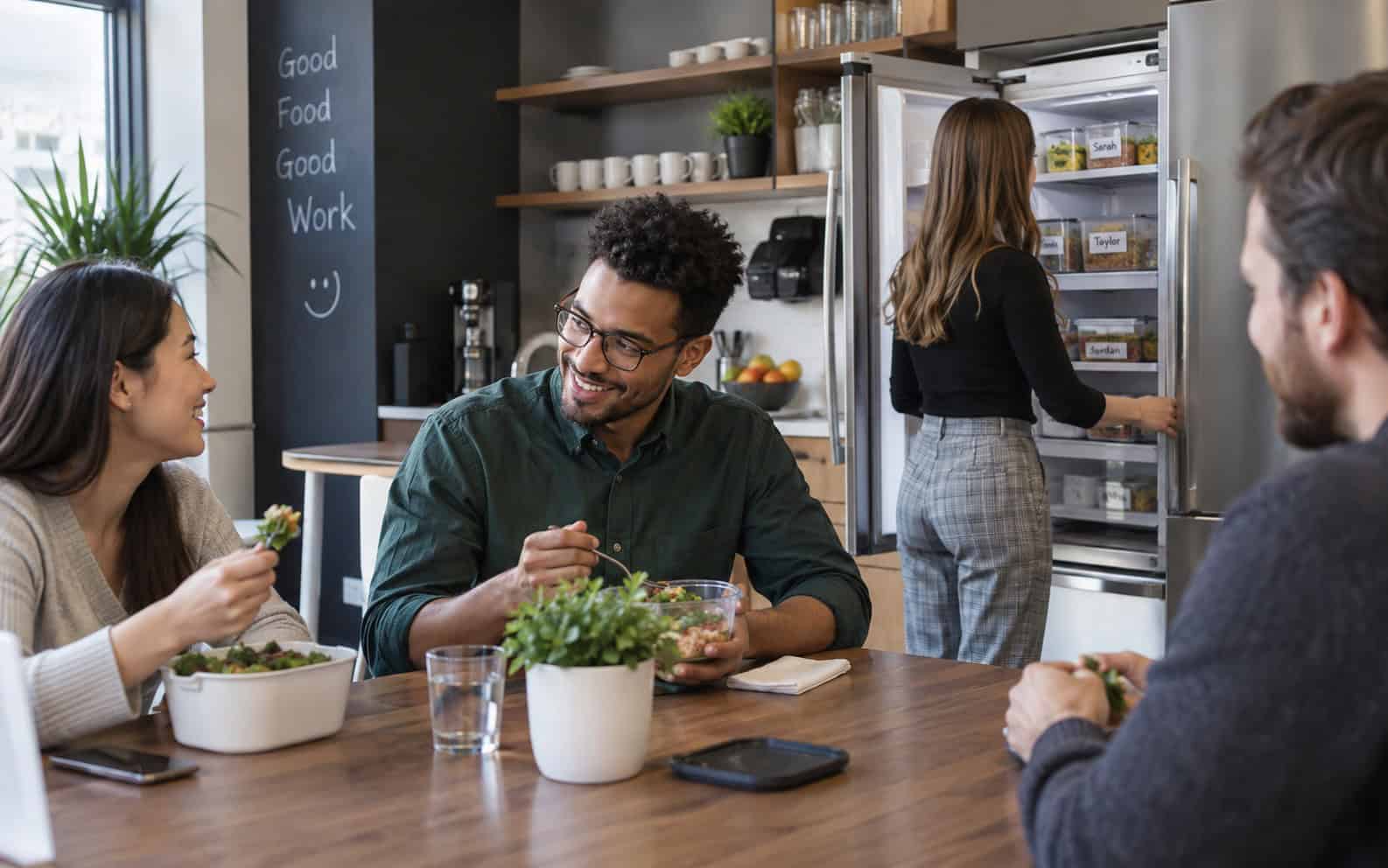
While working from home was commonplace in the years after the pandemic, more and more employers are expecting staff to spend most or all of their working week on site again now, according to HR Magazine.
The unwritten rules
Much of office food etiquette is unwritten, but most people agree on the basics:
- Avoid very strong-smelling food at your desk, such as reheated fish, and eat it in a kitchen or break area instead.
- Keep messy or noisy foods for the break room rather than shared desks.
- Label your food in the shared fridge and take leftovers home before they go off.
- Wash up your own mugs and dishes rather than leaving them in the sink.
- Do not help yourself to someone else’s food, however tempting.
- If you bring in treats to share, think about colleagues with allergies or dietary needs.
Take a proper break
Eating at your desk whilst responding to emails is a common practice but your body and mind will thank you for taking a proper break from work. Even a 15-minute walk outside in the fresh air can help combat the post-lunch slump and enable you to return to work feeling refreshed. Additionally, by not eating in front of a screen, you will actually taste your food.
Lunches that keep you going
A balanced lunch with protein, vegetables and wholegrains, such as a grain salad with chicken or beans, a wholemeal wrap or a hearty soup, releases energy more steadily than a sugary snack. The NHS guide to eating a balanced diet is a useful starting point.
There are some fantastic options for office lunch catering these days, thanks to specialists such as https://www.crumbsdelivered.co.uk/shop/office-lunch-delivery/. Catered lunches work well for meetings, training days and team celebrations.
Batch cooking and leftovers
Leftovers from last night’s dinner make an easy, cheap packed lunch for the next day, especially if you have a microwave at work. Chilli, curry, pasta bake and stews are all great choices to make a bit extra for lunch the next day and can be cooled quickly, kept in the fridge and taken in a sealed container. Simply reheat until steaming hot throughout before eating.
Smart snacks
| Instead of | Try |
|---|---|
| Biscuits from the tin | A handful of unsalted nuts |
| Sweets in the afternoon | Fresh fruit or berries with natural yoghurt |
| Crisps | Vegetable sticks with hummus |
| Sugary drinks | Water, or tea and coffee without extra sugar |
Frequently asked questions
Is it rude to eat at your desk?
Not usually. Many offices are fine with staff eating their lunches as long as there is no strong smell, and there is no mess left. It is worth taking note of what others do though, and remembering that it is generally better to take a proper break from your desk.
How can I keep packed lunches safe without a fridge?
Use an insulated lunch bag with an ice pack to keep your food cool. This will keep any perishable items such as meat, fish, dairy products and cooked rice cold until you can eat them. If in doubt, choose foods that are safe to eat at room temperature for a few hours, such as whole fruits and sandwiches that do not contain any perishable ingredients.
Where to go next
For more on eating well every day, read our guide to good food and nutrition.
