

Keeping your Home Warm this Winter
As temperatures fall it is no longer just about making your home comfortable. Health is important too, especially for older people, young children and people suffering from long-term health problems. A cold home also tends to suffer from condensation and mould. Also, a home not prepared for winter will cost more to heat than it needs to. The good news is there are plenty of ways to make your home warmer and more efficient.
Start with insulation
You can heat a home as much as you like, but if it cannot hold on to that heat, you are paying for warmth that escapes. Warm air rises, so an uninsulated or poorly insulated roof is one of the main ways heat is lost. The first thing to check is your loft insulation.
If the loft space has only a thin layer, adding more is often one of the least expensive and simplest methods of improving the efficiency of a house. Walls are the next big area. Cavity walls, found in many homes from the 1920s onwards, can have their cavities filled with insulation, but for solid-walled houses a more complex process of insulating them internally or externally is required.
Stop draughts at windows and doors
Another area where heat can escape from your home is through the windows and doors. Look for draughts coming from around the frames of doors and windows, as well as from letterboxes and keyholes. Also check if any of your double-glazed units have ‘blown’ and have condensation between the panes. These can be replaced without the need to change the entire window. There are also many simple and cost-effective solutions to prevent draughts entering through windows, such as self-adhesive draught excluder strips and brush seals. Thick or thermal-lined curtains and blinds can also help to keep warmth in at night.
Make your heating efficient
How you heat your home makes a big difference. If you have gas central heating, a modern condensing boiler is much more efficient than an older model. Having your boiler serviced regularly is also essential, not just for safety but because a boiler that is not working properly costs more to run.
Simple control of heating also helps, using a programmable thermostat and thermostatic radiator valves to only heat the rooms that are needed, at the times when they are needed. Bleeding radiators that have cold spots at the top also helps them to work properly.
Consider other types of heating
There are other ways to heat your home, either alongside or instead of a gas boiler. Underfloor heating is a popular choice – just find a professional like this underfloor heating Gloucestershire based company https://parsonsflooring.com/services/electric-under-floor-heating-gloucestershire who can install it for you. It works well under tiled and many wood floors and gives an even, gentle warmth.
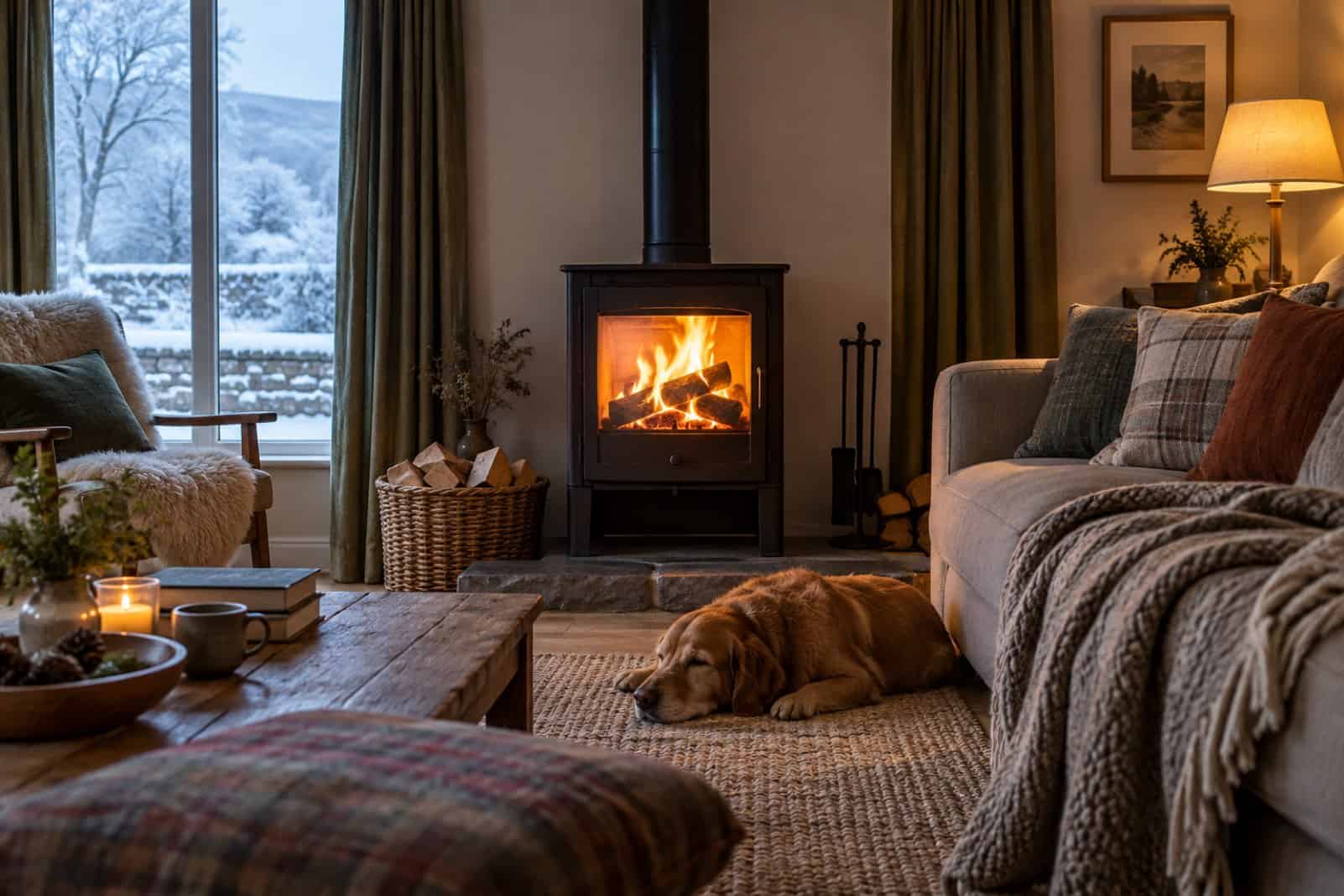
Wood burners are another option and add real atmosphere on a winter evening. They are a good way to heat one room without putting the heating on in the whole house. Use a stove that meets current standards, burn only dry, suitable fuel and have the chimney swept regularly. If you live in a smoke control area, there are rules on what fuel and appliances you can use. Always fit a carbon monoxide alarm in any room with a fuel-burning appliance.
Quick wins compared
| Improvement | Cost | Effort |
|---|---|---|
| Draught strips and thick curtains | Low | An afternoon |
| Bleeding radiators, setting thermostat and timer | Free | An hour |
| Topping up loft insulation | Low to medium | A day |
| Boiler service | Medium | A short visit |
| Cavity wall insulation | Medium | Installer, usually a day or two |
Frequently asked questions
What temperature should I keep my home?
The NHS recommends heating those rooms that are regularly used, such as the living room and bedroom. The heating should be set to at least 18°C, particularly for people aged 65 or over, lacking mobility or suffering from a health condition such as heart or lung disease. The bedroom can be kept a little cooler to aid sleep, but no room should be allowed to cool to a very cold temperature for long periods whilst occupied.
Is it cheaper to leave the heating on low all day?
For most homes, heating only when needed (using a timer and thermostat) will usually use less energy than leaving the heating on all the time. Very well-insulated homes and homes with heat pumps are possible exceptions as they are often most efficient when running continuously at lower temperatures.
Where to go next
If you have recessed ceiling lights, read our guide on when to add covers to old downlights, which can reduce heat loss into the loft.
