
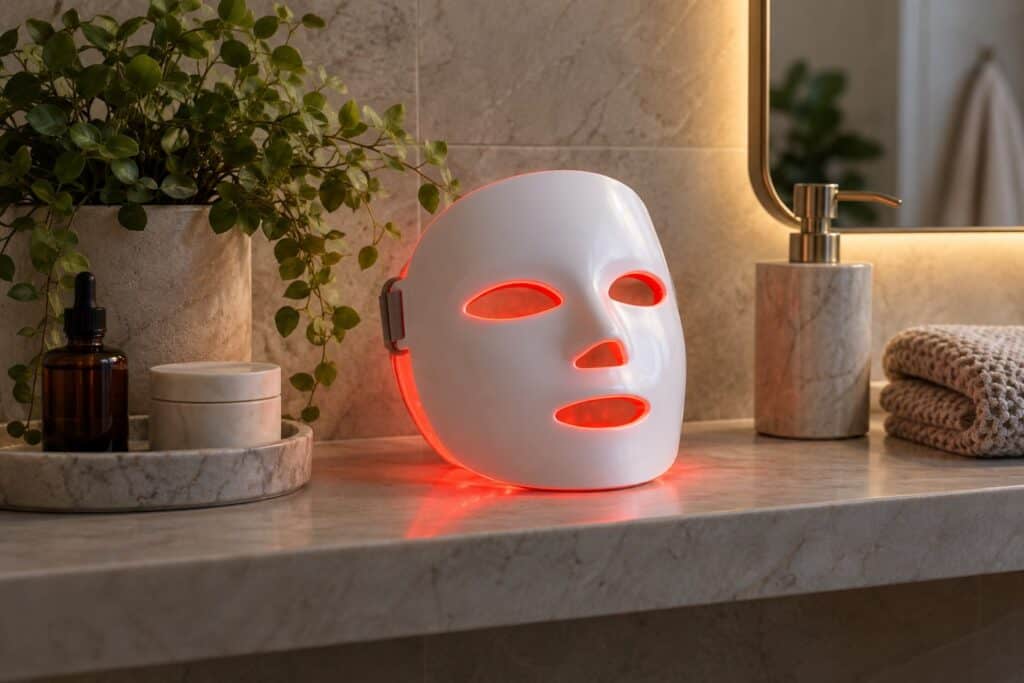
LED Mask Ads Banned by ASA
LED masks have been among the most talked-about beauty products of recent years, with many promising glowing, clear skin in a few minutes a day. As a result of the bold claims made by many of these products, they have been the subject of advertising rulings by the Advertising Standards Authority (ASA), the UK’s advertising regulator.
Why the ASA banned LED mask adverts
In November 2025 the ASA published rulings against adverts for several LED face masks that claimed the devices could treat or prevent skin conditions such as acne and rosacea. Acne and rosacea are medical conditions, and under the UK advertising rules, medical claims can only be made for a medicine licensed by the Medicines and Healthcare Products Regulatory Agency, or for a medical device with the right conformity marking.
The Beautaholics advert for their RejuvaLux mask was the subject of one of these ASA rulings. The ASA stated that as the Beautaholics mask was not an MHRA registered product no medicinal claims could be made for the product. The advert suggested that the product could solve problems such as acne and rosacea and that the LED light from the mask could reduce bacteria that cause acne.
The ASA has said it is determined to fight misleading advertising. Ads found to break the rules are prohibited from being displayed again in the form in which they were reported.
Cosmetic claims and medical claims
There is an important line that any beauty or wellness company must understand in respect of claims made about their products. Cosmetic claims are those that relate to appearance and therefore are claims that state that products make the skin look brighter or more even. Medical claims are those that state that a product will treat, cure or prevent a condition and need to be supported by appropriate authorisation from regulatory bodies. A claim that a face mask makes your skin look radiant is very different from a claim that it clears acne, which requires regulatory authorisation.
| Type of claim | Example wording | What is needed |
|---|---|---|
| Cosmetic | “Helps skin look brighter” | Evidence the product does what it says |
| Medical | “Treats acne”, “heals rosacea” | A licensed medicine or a medical device with the right marking |
Advertising is a powerful tool
From social media campaigns to embedded HTML 5 ads, advertising is a powerful tool that can help businesses thrive in competitive markets. As such, brands have a responsibility to ensure the content of their HTML 5 ads and social media campaigns is accurate and does not make promises that cannot be backed up with clear evidence, especially in health and beauty.
The same rules apply to all formats such as influencer posts and before-and-after images as well as paid social ads. Furthermore, online advertising is monitored automatically for possible contraventions by the ASA, so smaller brands and online-only sellers are not out of sight.
Marketing healthcare products responsibly
It is important that consumers can trust ads and this must particularly apply to companies advertising health and beauty products. They should draw a clear line between any medical claims made and the more general cosmetic benefits of a product.
- Check whether any claim describes treating, curing or preventing a condition.
- Hold evidence for every claim before the ad runs.
- Take care with before-and-after images, which can imply a medical result.
- Brief influencers and affiliates on what they can and cannot say.
- Take advice from the CAP Code guidance or the ASA’s advice service when unsure.
Frequently asked questions
Are LED face masks banned in the UK?
No. The ASA rulings relate to the way certain face masks have been advertised, not to the sale of the masks themselves. However, those same masks can still be sold by brands as LED masks, as long as no claims are made in relation to their treatment of medical conditions such as acne and rosacea without the necessary approval.
What happens when the ASA upholds a complaint?
The advertiser is told the ad must not appear again in the form complained about, and the ruling is published on the ASA website. The ASA can apply further pressure if an advertiser does not comply, including referral to other regulators.
Where to go next
For more on building ads and pages that work without overpromising, see our tips on designing clickable call-to-action buttons.
