
What Audiologists Check Before a Hearing Test
In the first few minutes of your audiology appointment before the actual hearing tests begin, the audiologist will carry out a number of checks. Here is a summary of what your audiologist will do and why each check is important.
The early questions and screening tests are not just a formality. A hearing test on one day can be influenced by many factors including the amount of wax in your ears or a recent cold. The audiologist needs to determine whether a valid test of hearing has been achieved and how to interpret the results. Decisions about referral for further assessment or treatment with hearing aids can also be influenced by these early screening tests.
Your medical and medication history
You will be asked about any general health problems and about any previous ear infections, operations or injuries. You will also be asked about any family history of hearing loss. The audiologist will also ask you about any current medicines you are taking. There are a few medicines that can affect hearing or cause tinnitus. These include some strong antibiotics, some types of chemotherapy and very high doses of aspirin. Bring a list of your regular medicines with you.
Your noise exposure history
The different causes of hearing loss tend to produce different kinds of results on the results chart. Noise-induced hearing loss usually creates a notch in the high frequency region, whereas age-related hearing loss tends to decline gradually towards the higher frequencies. Glue ear and some medicines have their own ‘fingerprint’. So tell the audiologist about noisy work, shooting, motorsport, loud music or years of using power tools.
Recent ear pain, discharge or illness
Some conductive hearing losses are temporary (e.g. caused by a cold, an ear infection or by the Eustachian tube in the ear being blocked). If tested during such a time then your hearing will probably seem worse than it really is. It’s usually best to postpone the test for a couple of weeks. Tell the person testing your hearing about any pain, discharge or recent illness at the start of the appointment.
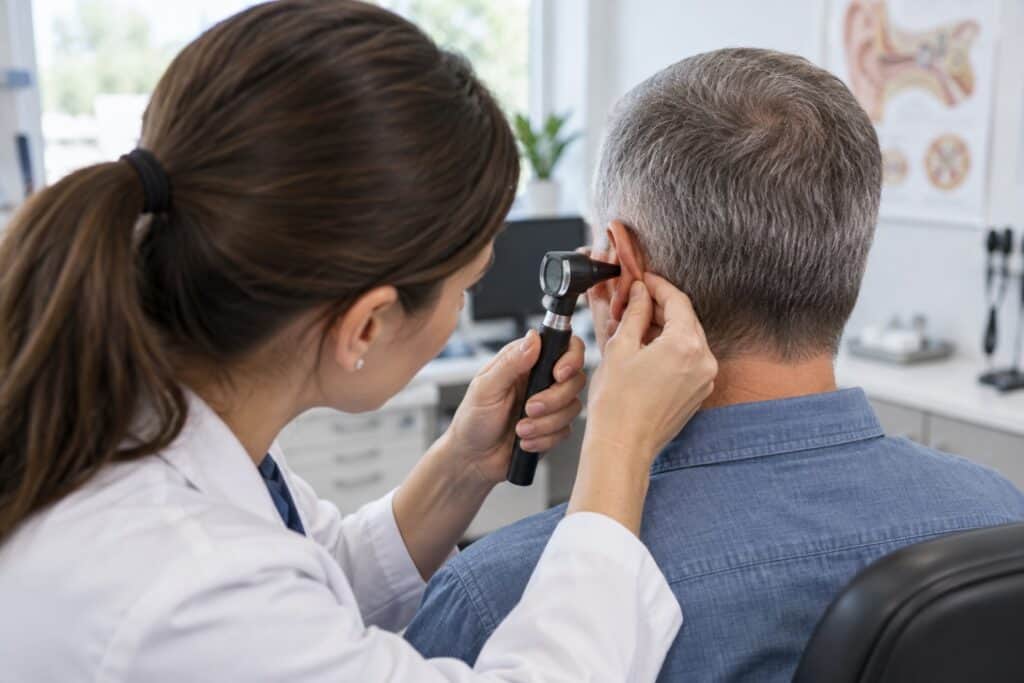
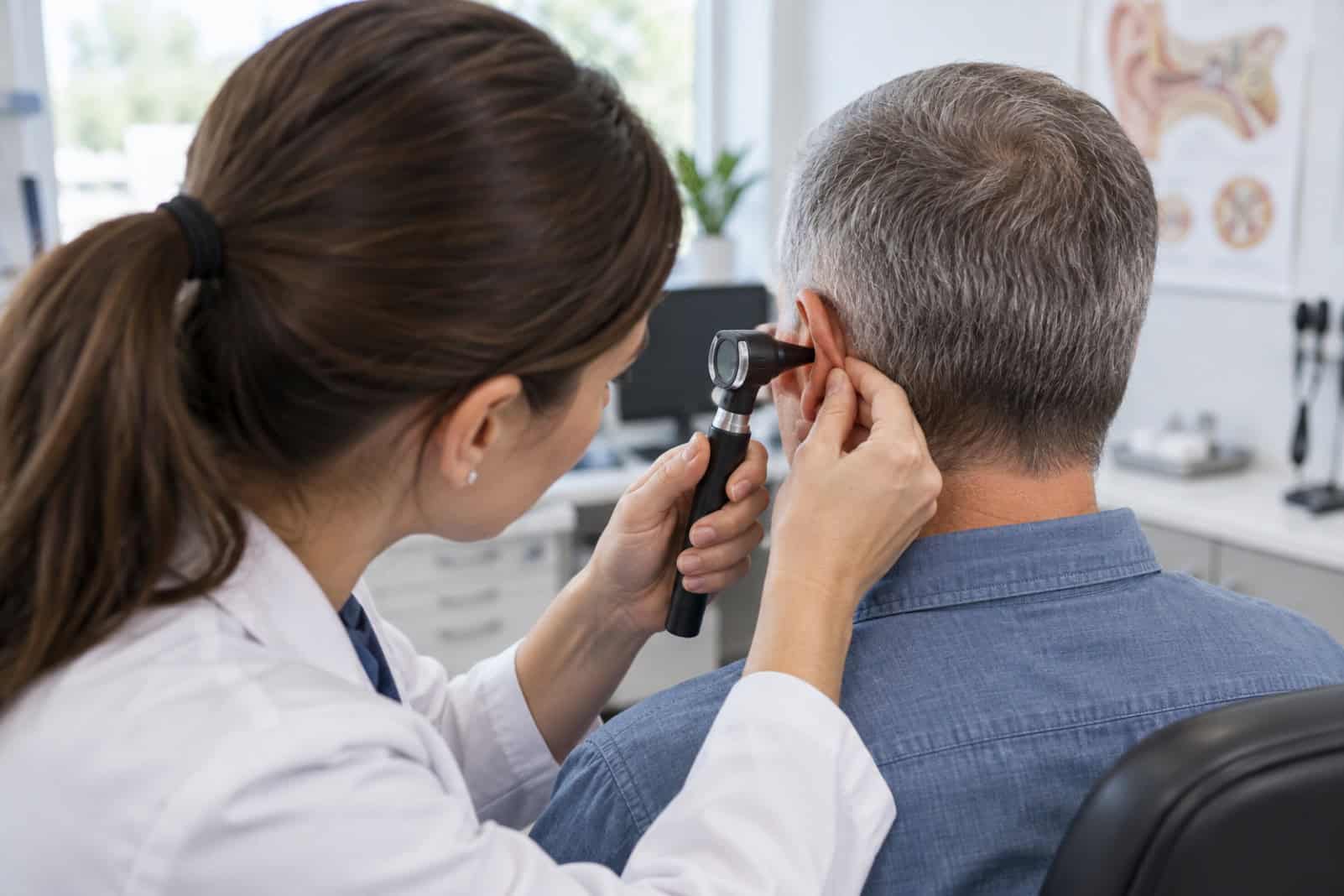
The otoscope examination
An otoscope is a small handheld instrument that contains a light and magnifying glass. It is used by the audiologist to look down the ear canal at the eardrum. Wax, redness, signs of infection, a perforated eardrum or fluid behind the eardrum can be observed. A full assessment may not be possible if the ear canal is blocked with wax, so it may need to wait until the wax has been removed.
In some clinics, this examination will also include a tympanometry test. The soft probe is gently placed at the entrance to the ear and while changing the air pressure, it measures the movement of the eardrum. The test is usually completed within a few seconds and gives an indication of any fluid or pressure problem in the middle ear.
Tinnitus and balance questions
If you experience tinnitus (ringing or buzzing in the ears) or have problems with dizziness and balance, say so, as these may need further assessment beyond what is included in the standard hearing test. Your audiologist may recommend a GP referral or a specialist clinic.
If you are looking for an appointment locally then Hearing Test Cheltenham details what local providers of hearing tests can offer.
How to prepare for your appointment
- Avoid loud noise for a day or so beforehand, as it can temporarily affect your hearing.
- Bring a list of your medicines and any previous hearing test results.
- Note down the situations where you struggle most, such as restaurants, the television or phone calls.
- If you can, bring a family member or friend, as a familiar voice is often used in the assessment.
- Let the clinic know in advance if you have a cold or ear infection, and rebook if needed.
Frequently asked questions
Does a hearing test hurt?
No, the otoscope examination and the listening tests are painless. During the tympanometry test, a small change in pressure is made in the ear canal. Some people can feel this. It is similar to the feeling of pressure when a plane is landing, but it only lasts a few seconds and stops when the probe is removed.
What happens if the audiologist finds a problem during the checks?
It depends on what they find. If there is a lot of wax, it may need clearing before the test can go ahead. Other things they may find, such as signs of an infection, a perforated eardrum, sudden hearing loss or hearing loss in only one ear, would usually mean you were referred to your GP or to an Ear, Nose and Throat Clinic for medical treatment rather than hearing aids.
Where to go next
If ringing in the ears is one of your concerns, our article on the challenges people living with tinnitus face is a useful read.
This preliminary process is in place to ensure that the test accurately reflects the individual’s true hearing ability and is not skewed by one particular day.
