
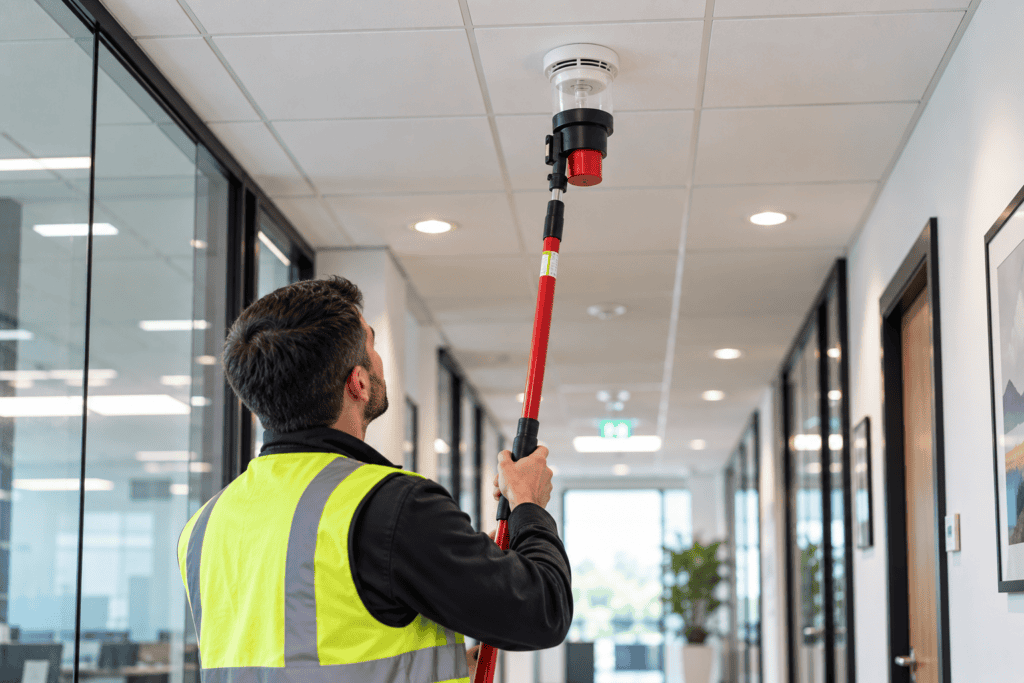
How Fire Alarm Maintenance Keeps Northamptonshire Buildings Safer
A fire alarm system is only as good as the maintenance carried out behind it. Fire detection and alarm systems include panels, detectors and call points which can fail without warning. A fault which has not been detected for months is likely to be the very one that matters on the day the system is required to operate. Simple weekly checks, recording of findings and regular servicing by a competent engineer will keep the fire system ready in an office, shop, school or block of flats across Northamptonshire and beyond.
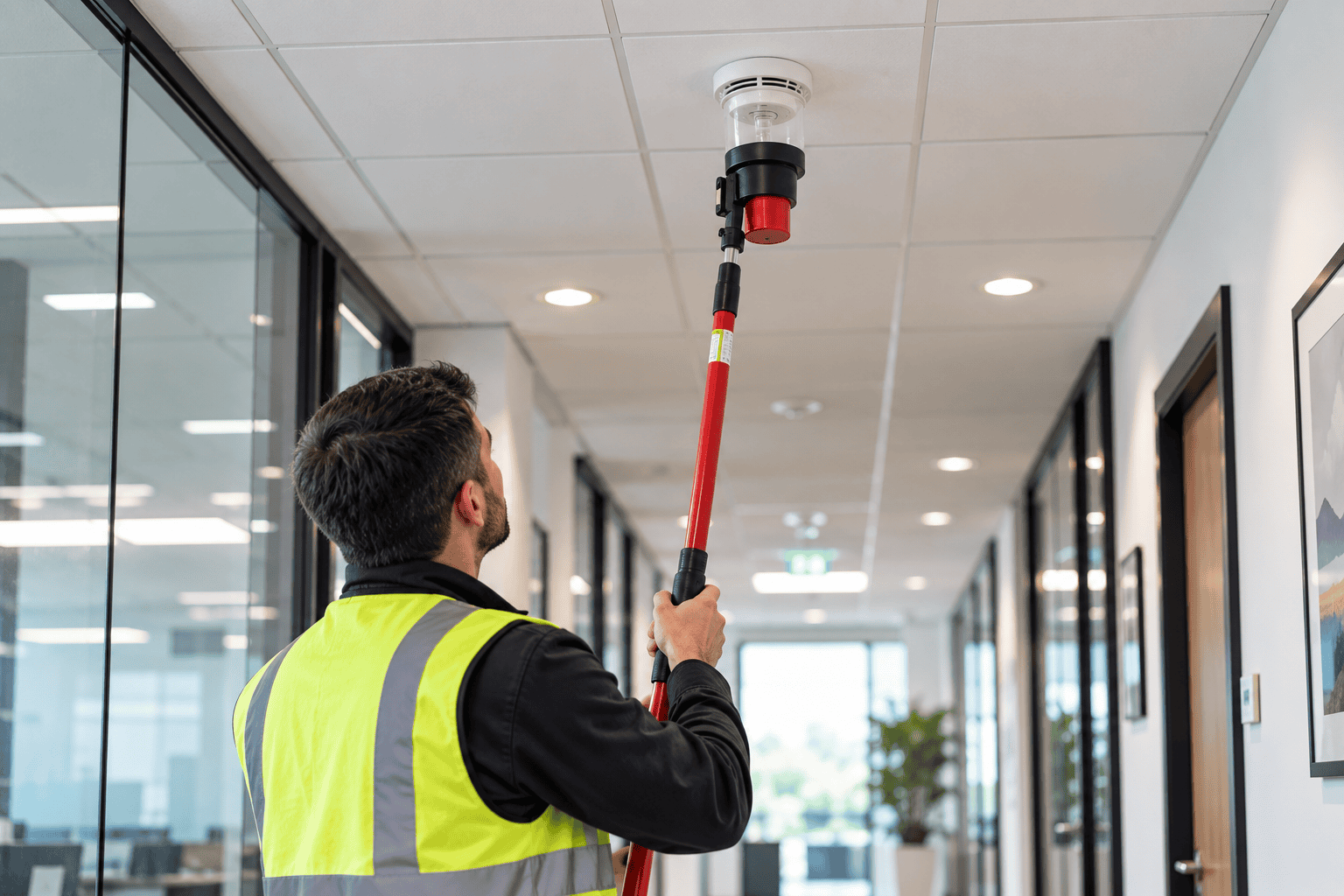
Test call points and detectors weekly
The weekly test for fire detection and alarm systems in non-domestic premises is recommended in the British Standard, BS 5839-1. This recommends that the responsible person, or someone they nominate, tests the system on a weekly basis using one of the manual call points in the system. The test should be carried out during normal working hours, checking that the alarm sounds and the panel responds. The test should be carried out using a different call point each week in sequence so that over time all of the call points on the system will have been tested. It is also recommended that the test is carried out at the same time each week so that others will know whether the activation of the system is a test or an actual fire.
Smoke and heat detectors should be tested periodically by a competent person using the purpose-made tester (i.e. aerosol smoke tester or heat tester) and never by actual smoke or fire.
Smoke alarms at home follow a different routine, and our piece on what the monthly smoke alarm test does and does not check explains it.
Inspect the control panel for faults
Check the control panel at the start of each week and every day if possible. If there is a fault or warning indicator it could indicate a break in a circuit, a detector has been removed or communication with part of the system has been lost. Treat any fault on the panel as an urgent matter. A fault left on the panel means part of the building may not be protected by fire detection and people can become complacent and ignore the panel.
Check battery and backup power
The majority of systems are powered from the mains and have a standby battery installed to take over in a power cut. Its condition needs to be checked as part of your normal service visit and recorded. The battery should then be replaced on the date recommended by the manufacturer (usually every 3-4 years). Even though it looks fine, a battery can still fail to keep your system powered through a long period of outage.
Clear detector heads of dust and obstructions
Dust, grease and cobwebs within the detector heads can cause false alarms and also impact upon the speed of response to real smoke. When cleaning within the vicinity of the detectors, be cautious not to damage them and do not cover or paint detectors, or stack stock or furniture close enough to block the airflow. Also, ensure that any covers to the detectors are removed at the end of each working day if they have been covered up for building work.
Keep the fire alarm logbook up to date
Record every test, every fault and every repair in the fire alarm logbook, with the date and the name of the person who carried out the work. This is a requirement of the workplace fire safety responsibilities under UK law, and is intended to help protect the responsible person.
The responsible person needs to demonstrate that suitable action is being taken to manage the system. This is usually shown through an accurate log and is one of the first things that fire safety inspectors and insurers will look for. Additionally, the log allows for identification of recurring issues with equipment, such as the same detector causing repeated false alarms.
Book regular servicing by a competent engineer
BS 5839-1 recommends inspection and servicing of the complete system by a competent person at intervals of no greater than six months. This will include a check of the panel, batteries, call points, detectors and sounders, with details of what was checked and all items found to be faulty recorded.
| Task | How often | Who |
|---|---|---|
| Check the panel for faults | Daily or at least weekly | Responsible person or nominee |
| Operate a manual call point | Weekly, a different one each time | Responsible person or nominee |
| Record tests, faults and repairs | Every time | Whoever did the work |
| Full inspection and service | At least every six months | Competent engineer |
| Standby battery replacement | As the manufacturer recommends | Competent engineer |
Fire Alarms Northamptonshire is covered in more detail at //isefireproducts.co.uk/fire-alarm-systems/northamptonshire.
Frequently asked questions
Do we need to tell the alarm receiving centre before a weekly test?
If your system is monitored then it is best to contact the alarm receiving centre before undertaking a test and advise them when the test has finished. They can then treat the test as such rather than as a real alarm. It is worth writing this step into the weekly procedure so that whoever does the test does not forget it.
What should we do about repeated false alarms?
Log each unwanted activation including the time, the detector(s) activated and the probable cause. Get your engineer to review the log for trends. Cooking fumes, steam and building site dust plus a detector sited in the wrong location are typical causes. Changing the detector type or re-siting the existing one(s) is often sufficient to cure the problem without compromising protection.
Where to go next
For a quick way to tell whether your system is healthy between services, see our guide on how to tell if your fire alarm is working.
By following a schedule of routine checks and recording your findings, a fire alarm system can be turned from a simple box on the wall into a reliable solution for fire safety.
