
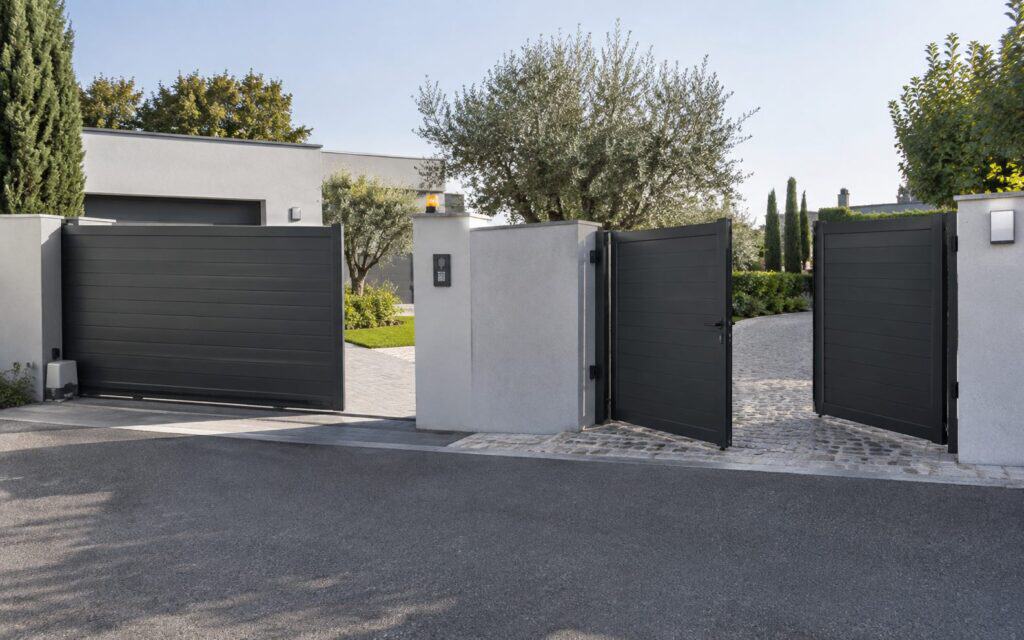
What is the difference between sliding and swinging gates?
Choosing a new gate usually comes down to two main designs: a swing gate that opens on hinges, or a sliding gate that runs sideways along a track. Both can be manual or automated. The look matters, but in practice the space you have, the slope of your drive and your budget often decide which type suits you best. It is worth speaking to gate experts before you decide. Complete Gate is the best place to find Electric Gates Cirencester.
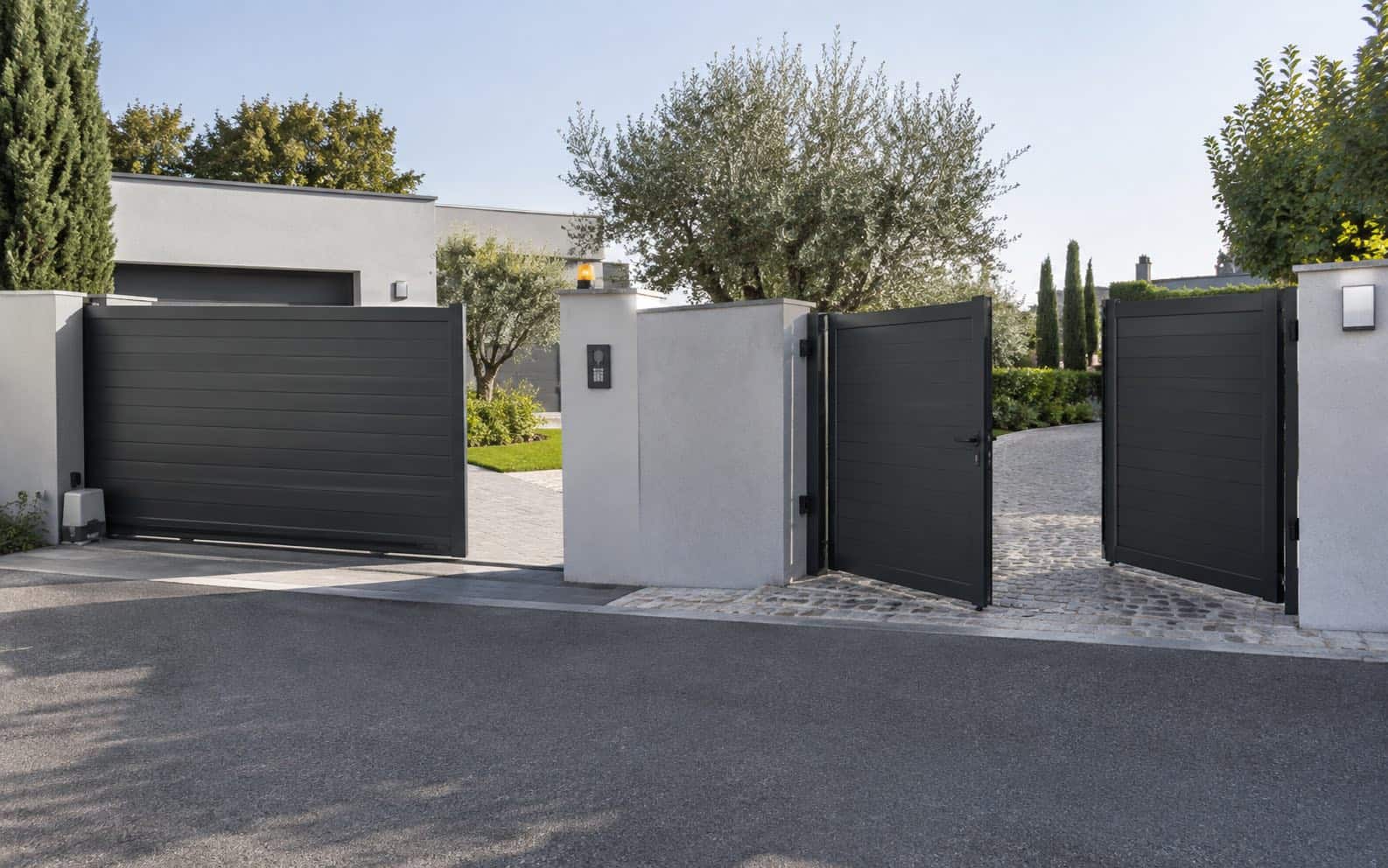
Swing Arm Gates vs. Sliding Gates
Space
When choosing between swing and sliding gates, first consider where you will open your gates from. The swing gate needs clearance to open up into your drive or occasionally outwards from your drive. Parking close to the gate or having a short drive can see the arc of the gate interfere with opening. Sliding gates open sideways and therefore require no space in front of or behind the gate but will require a clear run along the boundary of your property at least the length of the opening.
Slope and terrain
Swing gates on sloping drives may catch the ground when opening unless designed for the slope. However, sliding gates are often better on sloping or uneven drives as they run along a level track or are cantilevered. A good installer will visit, measure up the site and assess the ground prior to offering a gate design.
Aesthetics
Traditional swing gates are often provided in pairs to property entrances and offer a classic look to complement many period and country style homes. Modern sliding gates have a sleek appearance and can be supplied to complement a property’s style, using a variety of gate styles, materials and finishes.
Cost and installation
Sliding gates usually need more groundwork, such as a track or foundations for a cantilever system. Whilst installation of a swing gate is generally easier than a sliding gate and can be completed on suitable sites, the price of both will reflect the type of automation to be used, the type of material used and the overall size of the gate, so get a detailed quote based on your chosen design.
Swing vs sliding gates compared
| Swing gates | Sliding gates | |
|---|---|---|
| Space needed | Clear arc to open | Clear run along the boundary |
| Sloping drives | Can be tricky | Often better suited |
| Look | Traditional | Modern |
| Installation | Often simpler | More groundwork |
| Wind | Large leaves can catch the wind | Less affected by wind |
Safety with electric gates
Automated gates need to have safety features fitted, such as photocells and force limiting devices, which will stop or reverse the gate if something has got in the way. Also, automated gates should be serviced regularly, and the person who installs your gates should understand the safety standards for powered gates.
Frequently asked questions
Can an existing gate be automated?
Often yes, but only if your gate and posts are in good condition and strong enough to hold the weight of the gate(s), with adequate hinges. Your installer will be able to assess all of these for you and recommend an appropriately sized motor(s) for your powered gates.
Do electric gates work in a power cut?
Most electric gates are supplied with a manual release so they can be opened by hand in a power failure, and some can be fitted with a battery backup. Ask your installer about the release and how it works.
Where to go next
Choosing the gate itself? Read why choose a metal gate.
