
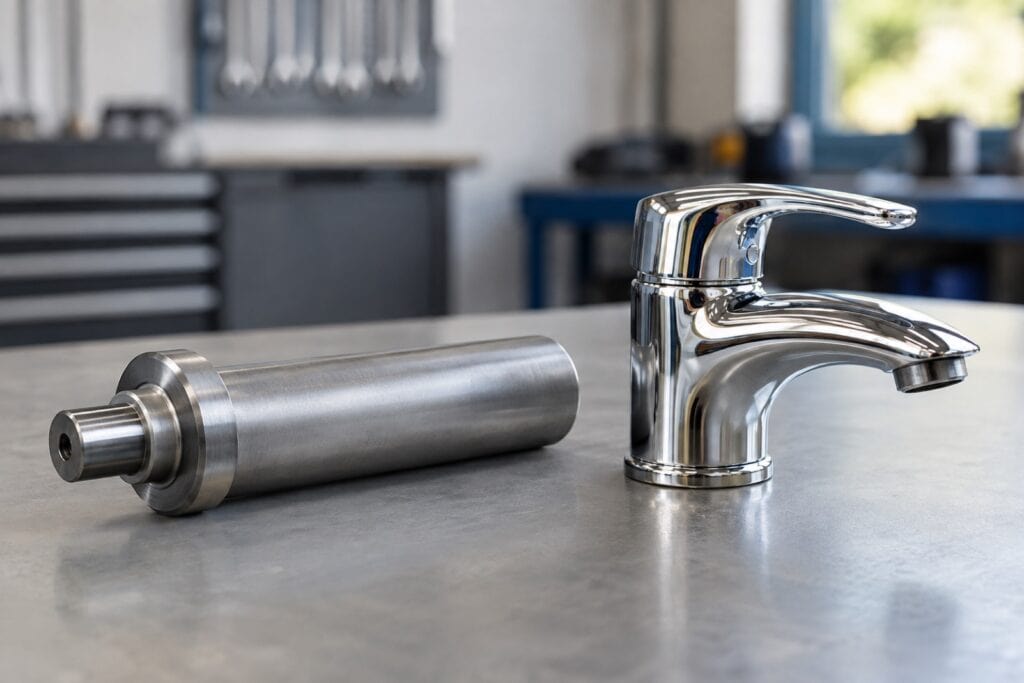
What is the difference between hard chrome and decorative chrome plating?
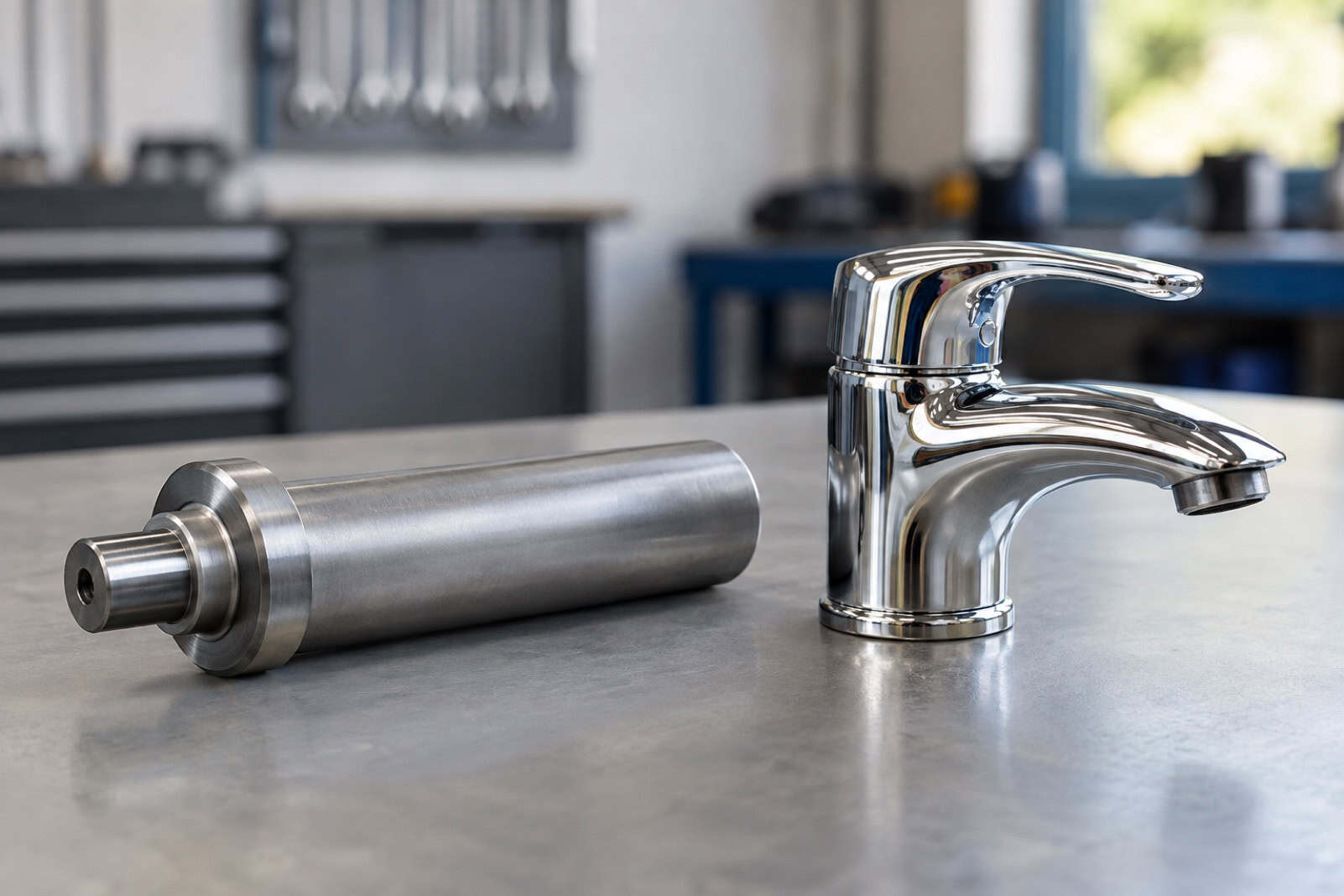
The term “chrome plating” might lead one to believe that all chrome finishes are created equal and serve the same purpose. While it is true that hard chrome and decorative chrome may appear similar, they actually serve very different purposes. The primary function of one of these finishes is performance, while the other serves mainly aesthetic purposes.
Hard chrome focuses on durability
If you need components to handle wear, friction and demanding environments, hard chrome makes more sense. Engineers often use it on things like hydraulic rods, industrial machinery and moving parts because it creates a thicker coating designed for strength and long term use.
Hard chrome is usually applied directly onto the base metal without the use of a nickel layer. This type of chrome is very hard and is typically used where there is a lot of sliding or rotating, in order to take advantage of its low coefficient of friction. Depending on the job, the layer is applied in a range of thicknesses from a few microns up to several hundred microns. Thicker layers are often ground back to an exact size after application, which is why hard chrome is useful for restoring worn components, such as shafts and rods, to their original dimensions.
When choosing a coating to protect the components, function is the most important factor. You are not choosing it to make the part look nice. You are choosing it to stop components failing under load.
Decorative chrome focuses on appearance
In contrast, decorative chrome is designed to give a bright, mirror-like finish to vehicle trim, bathroom taps, fittings and household products.
The chrome layer is thin, typically less than a micron, and most of the corrosion protection is provided by the underlying nickel plating and in many cases a copper layer beneath this. The outer chrome layer provides colour, brightness, and a hard, tarnish-resistant surface. Because the layer is so thin, decorative chrome is not designed for wear and tear.
If you want to learn more about specialist hard chrome applications, specialists such as poeton.co.uk/advanced-treatments/apticote-100-hard-chrome-plating/ provide you with more details.
Hard and decorative chrome compared
| Hard chrome | Decorative chrome | |
|---|---|---|
| Main purpose | Wear resistance, low friction, rebuilding size | Appearance and tarnish resistance |
| Typical thickness | A few microns to several hundred | Usually under a micron of chrome |
| Layers underneath | Usually applied directly to the base metal | Nickel, often over copper |
| Typical finish | Can be dull or matt, often ground or polished after | Bright, mirror-like |
| Common uses | Hydraulic rods, rolls, moulds, shafts | Trim, taps, fittings, furniture |
A note on hexavalent and trivalent chrome
For decorative elements the safer trivalent chromium process is widely used and produces a colour very close to that of the traditional hexavalent chromium process, which is hazardous and tightly regulated. For wear parts, however, hard chrome plating has proven to be more difficult to replace and, where hexavalent chromium plating is used, is processed under strictly controlled circumstances. The process used by your plater may be of concern to your supply chain, so ask them which process they use.
Which option suits your project?
In selecting between the two processes, the key factors to consider will be how you intend to use the finished part, and appearance versus durability. If appearance is most important then decorative chrome is the better choice. If the parts are to be subjected to hard use then hard chrome has greater practical benefits.
- Does the surface slide, rotate or rub against something? Choose hard chrome.
- Does it need to be rebuilt to an exact size after wear? Choose hard chrome.
- Is it a visible part that mainly needs to look good and resist tarnish? Choose decorative chrome.
- Does it need corrosion protection outdoors? Check the nickel thickness in a decorative system, or discuss sealing and thickness with the plater for hard chrome.
Frequently asked questions
Can decorative chrome be used on engineering parts?
The only time that a part would be coated with a decorative layer is where appearance is more important than wear resistance. Sliding surfaces and load-bearing surfaces will quickly wear through the thin decorative layer to expose the nickel beneath. Parts of this nature would be better coated with a wear-resistant coating such as hard chrome.
Is hard chrome always shiny?
No. As plated, hard chrome can look dull or slightly greyish. The colour can vary, depending on layer thickness and application method. Later grinding and polishing of parts can result in the typical shiny appearance of hydraulic rods. The shiny appearance is caused by surface finishing and not by the coating itself.
Where to go next
For more on why engineers choose it, read about the four benefits of hard chrome plating.
